The Florida Ferry Fiasco: Why We’re Subsidizing Our Competition

By Patrick Gallagher, Executive Director
Marine Exchange of Puget Sound
July 14, 2025


I waited a bit to cool off about Washington State NOT choosing a Washington shipyard to build out a new fleet of state ferries. For a week I sat here thinking a mantra: Washington Values, Florida Paychecks.

Washington Values, Florida Paychecks.

I’ve been wondering why nobody seems overly combative or pissed, and I honestly think it’s because we’re getting used to the Washington maritime industry getting screwed by this state. Gotta ask — when did Washington State decide that “Buy American” meant “Buy Anywhere But Washington?”

This State Has No Comprehensive Maritime Strategy

I get it – this is expensive, and there’s a lot of pressure to restore the long-neglected ferry system (Thanks, Inslee). I’m not certain I’d choose to shop at Whole Foods vs Costco either right now, but I have to ask – REALLY?

We play by Washington’s rules – higher wages, stricter environmental standards, premium real estate costs – and our reward? Watching our tax dollars sail to states that undercut us at every turn.

This is the first out-of-state ferry contract in 50 years, and (let’s be plain) we’re sending at least $714.5 million Washington State dollars to Florida while local shipbuilders get bypassed. I’m sitting here watching almost a billion of our dollars ship off to Florida, and I’ve got some questions.

And let’s be clear, Eastern Shipbuilding is a queen of cost overruns. Just take a hard look at the Coast Guard OPC project, and you’re looking at our future. Just think for a minute that the contracting officers should have been driving to Everett instead of flying to the Florida panhandle. Local has benefits that are impossible to measure.

The Big Dark vs. Florida Sunshine

We’re sending Washington money to a place that’s never seen a Puget Sound winter. They know nothing of The Big Dark, July flannel weather, salmon runs, Vitamin D deficiency. We’ve got the most kick-ass technology companies in the world, but we can’t manage to deliver contracts to local shipbuilders. We can code a billion-dollar app but can’t bid a competitive ferry.

So we operate in misty darkness for half the year, but apparently we’re supposed to compete in the bright Florida sunshine when it comes to pricing. I don’t want to get overly dramatic, but Sub Pop Records kept it local – why can’t ferry contracts?

Built for the Pacific Northwest, funded by the Pacific Northwest, constructed in the Gulf of America. Yeah, I’m pissed.

This Place Made Us Who We Are

I LOVE this place. I LOVE this industry here because this place and this water gave me everything I have.

We built the maritime economy that made the Pacific Northwest a global powerhouse. Seattle/Tacoma wouldn’t be Seattle/Tacoma without maritime. Then, we developed the environmental standards, workforce protections, and safety regulations that became the gold standard for the industry. As a relative outsider, I can verify that nobody does this better than us. Now we’re being penalized for our own success.

Every dollar we send to Florida is a dollar that won’t hire a Washington welder, support a local supplier, or strengthen our maritime infrastructure. I won’t pretend to understand the whole of economics, but fewer dollars on the waterfront means fewer happy hour beers and Taco Tuesdays. There will be fewer apprenticeships.

Fewer people will get married, and fewer people will have kids. Yeah, this is what this means.

We’re not just losing a contract – we’re funding the erosion of our own competitive advantage.

Time to Fight Back

This needs to stop. We need a comprehensive maritime strategy. We’ve needed it for a generation.

The question isn’t whether we can build these ferries. The question is whether we still want to.

I’m ready to scrap. I’m ready to defend what should be ours.

This is exactly why we need strong maritime advocacy in Olympia. Join us at the MXPS Annual Meeting on September 11th to discuss how we fight back.

Register for the Annual Meeting


The Marine Exchange of Puget Sound has been advocating for Washington’s maritime community since 1980. We provide 24/7 vessel tracking, industry intelligence, and policy advocacy to support safe, secure, and efficient maritime operations in the Pacific Northwest.

Upcoming Change to ERTV Fee Structure – Streamlining Vessel Monitoring Costs


FOR IMMEDIATE RELEASE
July 3, 2025
Contact: Patrick Gallagher
patrick@marexps 206-771-1620

Upcoming Change to ERTV Fee Structure –

Streamlining Vessel Monitoring Costs

Seattle, WA – To streamline operations and support a more balanced system, the Marine Exchange of Puget Sound will be consolidating its long-standing vessel monitoring fee into the existing Emergency Response Towing Vessel fee, which is required under Washington State law. This change will ensure every commercial vessel calling Puget Sound benefits from comprehensive monitoring and 24/7 shift-based support—further enhancing safety for all users of our ports. This update represents a joint effort between the Marine Exchange and the ERTV Compliance Group to improve transparency and administrative efficiency for all vessel operators calling Puget Sound.

WHAT’S CHANGING

Effective August 1, 2025, the Marine Exchange will no longer invoice individually for the vessel monitoring fee currently assessed on arriving vessels. Instead, those costs will be included in the mandatory ERTV invoice structure under RCW 88.46.130

WHY THIS MATTERS

For decades, the Marine Exchange has provided 24/7 watchstanding and real-time monitoring to support the safe movement of commercial vessels. Until now, this essential service has been funded voluntarily—supported by about 77% of arrivals.

By integrating these costs into the ERTV framework:

  • Operators will no longer receive a separate invoice for vessel monitoring.
  • Billing will be more streamlined and unified – aligning regulatory compliance with system-wide operational benefits.

WHAT’S STAYING THE SAME

  • The ERTV program, as mandated by Washington State, remains unchanged in scope and operation.
  • The Marine Exchange’s 24/7 AIS monitoring, coordination with the Coast Guard and Pilots, and support of port resilience will continue without interruption.
  • Members will retain full access to Marine Exchange arrival/departure tracking, alerts, and maritime domain tools.

The Marine Exchange of Puget Sound recognizes that any change in cost structure raises important questions, and is committed to working closely with operators to ensure clarity, transparency, and value. Please don’t hesitate to contact the Marine Exchange if you have questions or would like to discuss the operational or financial details of this transition.

Thank you for your continued partnership and support in helping ensure the safety and efficiency of our waterways.

###

Weekly Roundup: Global Ripples, Local Traffic

As the maritime world braces for geopolitical shifts, tariff changes, and supply chain tremors, Puget Sound continues to offer a front-row seat to how global currents shape regional activity. Here’s a concise view of what moved this week—from vessel and berth trends to policy headlines and the future of Coast Guard support.


Vessel & Berth Trends: A Solid Uptick (!)

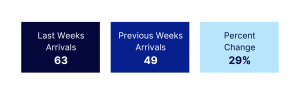
Vessel Arrivals rose by 29% (49 → 63 vessels), driven by sharp increases in:

  • Bulk cargo: up 167%
  • Tug/ATB movements: up 300%
  • Vehicle shipments: up 60%

Berth Arrivals climbed 26% (54 → 68), with standout gains in:

  • Tacoma: up 71%
  • Cherry Point: up 100%
  • March Point: up 40%

These surges point to rising industrial throughput, repositioning ahead of summer fuel runs, and shifting terminal capacity across the Sound.


Operational Snapshot

All seven AIS towers in our network reported 100% uptime with clean, uninterrupted transmissions.


Policy Pulse: From State Law to Global Trade

Washington State Legislative 

Changes (Effective July 27, 2025):

  • SB 5191: Expands paid leave for maritime workers
  • HB 1167: Strengthens maritime education in schools
  • HB 1511: Increases pay for ferry captains and deck officers

Federal Developments:

  • Imports at the Ports of Los Angeles and Long Beach dropped 24% in May—the lowest since mid-2023.
  • Spot shipping rates (Shanghai to West Coast) fell nearly 7% after early summer highs.
  • The USTR backed off proposed penalties on non-U.S. LNG tankers and vehicle carriers, attempting to ease supply chain pressures.

Spotlight: Coast Guard Funding in Limbo

Despite unanimous Senate approval of S. 524, the Coast Guard Authorization Act of 2025, the bill is stalled in the House. Majority Leader Steve Scalise announced it won’t be brought to a vote, delaying key funding and reforms.

Meanwhile, the FY2026 DHS budget proposal slashes shore infrastructure funding from $400 million to just $21 million. This comes despite a well-documented $7 billion backlog in repairs and modernization needs.

These delays have direct implications for Coast Guard readiness—and by extension, for everyone operating in our waters.


Final Take: Why It Matters

Vessel and berth volumes are signals. Changes in traffic reflect more than cargo flows; they echo policy shifts, labor movements, and geopolitical uncertainty.

A resilient maritime system isn’t just built on ships and terminals—it’s built on coordination, infrastructure, and well-supported public service partners like the U.S. Coast Guard.

At the Marine Exchange, we’ll continue tracking the data, maintaining uptime, and telling the story behind the numbers.


Let’s Stay Connected

What are you seeing in your corner of the maritime world? How are these national and global changes showing up at your dock?

Weekly Roundup: Arrivals Lag, Maritime Laws Land, Youth Fundraiser Gains Steam

Executive Summary

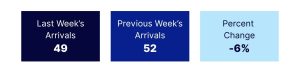
Vessel activity dipped last week across Washington ports — a concerning trend given the ongoing cruise season. Overall arrivals dropped from 52 to 49, continuing a downward trajectory when our seasonal average should be topping 60.

Notable Changes:
  • Tanker arrivals rose +29% (from 7 to 9)
  • General cargo fell to 0 (from 2)
  • Container ships dipped slightly (–6%)
  • Passenger traffic held steady at 13 vessels

Operations & Technology

  • New Data Access Tool: We’ve signed a contract to build an API for real-time watch floor data. Once live, members will be able to integrate live traffic insights into their own operational platforms.
  • AIS Network Status: All 7 receiver towers are fully operational with 100% uptime this week.

Policy & Legislative Update

New maritime laws take effect on July 27, 2025, with implications for ferry staffing, paid leave, and youth maritime training:

  • HB 1167 – Expands maritime education
  • SB 5191 – Enacts paid family leave coverage for dockworkers
  • HB 1511 – Ferry captain salary updates
  • SB 5794 – Big win for Washington Maritime because we successfully pursued WA legislation: Tax rollback goes into effect Jan 1, 2026
  • SB 5281 – A pro-tourism vessel permit, easing nonresident vessel rule (effective Sept 1, 2025)

Spotlight: Global Trade Fog, Local Impact

The Trump-era spike to 145% tariffs on Chinese imports—now eased to a much hyped yet still-punishing 55% total average (without clear or transparent agreements established yet) —has contributed to perpetual market confusion that we’ve yet to fully work out. It’s very hard to say what the long-term trend is for us in PacNW, but overall it’s not looking good for the remaining 2025 and early 2026 ship count.

Ships are still arriving in the US but with less cargo onboard, yet ocean carrier bookings are at near full capacity. What a paradox of the market (!), right? yet it sort of makes sense in that we still need to move cargo that meets economic muster, so there’s got to be an expense ratio that is still profitable.


Scholarship Success – Thank You!

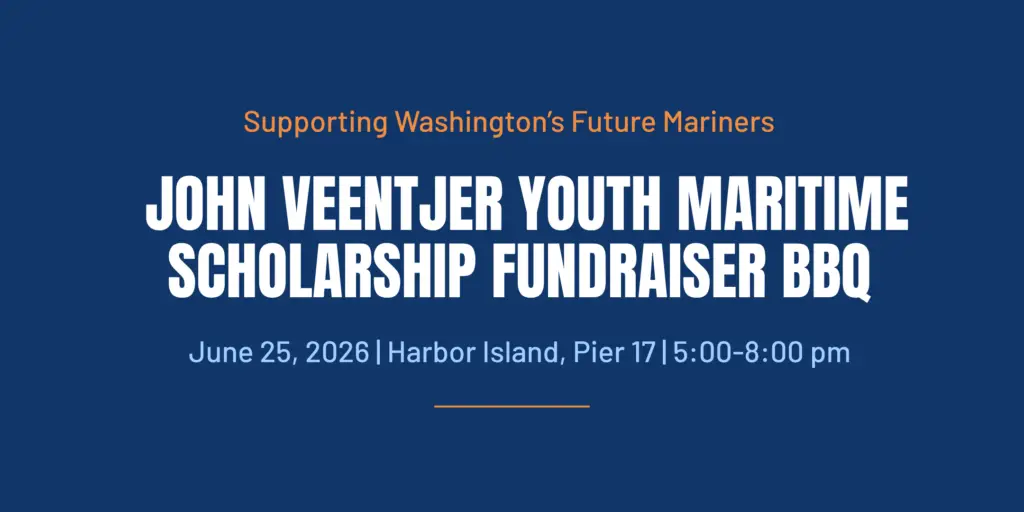
What a day! Our first annual John Veentjer Youth Maritime Scholarship Fundraiser Cruise aboard the Virginia V was a huge success — raising nearly $10,000 to support young people pursuing maritime careers.

It was an incredible day on the water, with sunshine, good company, and powerful stories. Chloe, a graduate of the inaugural Maritime High school class and future mariner, shared her journey and plans to attend Cal Maritime this fall. Many attendees shared memories of the Virginia V — and for many like us, it was their first time taking her out on a cruise.

If you were not able to make it, there’s still time to support the fund. We’ll continue fundraising through the year, with scholarships awarded in May 2026 in partnership with YMTA. Donate here to help us keep the momentum going and support the next generation of maritime professionals.

April in Review: Steady Through the Storm

I’m exhausted by what’s happening in this little/big world. If it didn’t impact thousands of people, I could just go back to my garden.

But – no, here we are. So many things I can’t control but trying like hell.

April 2025 closed with 186 commercial vessel arrivals across Puget Sound and Grays Harbor — a modest monthly total, but one carrying deeper meaning.

Container traffic held its position at 58 arrivals, while tanker and bulk movements reflected slight softening. The return of cruise ships — 13 in total — added seasonal energy to Seattle’s waterfront. Tacoma led all ports with 78 arrivals, driven by RO/RO and container throughput. Seattle followed with 58, supported by a mix of container, bulk, and passenger traffic.

Foreign arrivals remained steady at 118. Japan, South Korea, Canada, and China were the region’s top overseas trading partners — a reminder that despite rising protectionist rhetoric, our ports remain global in purpose.

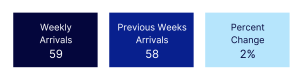
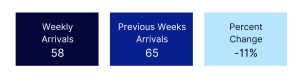
While vessel traffic ticked down 11% last week, the Marine Exchange continues to provide up-to-the-minute maritime intelligence to help our partners plan, coordinate, and adapt.

Legislative Wrap-up

Several key maritime bills were signed or delivered to the Governor:

  • HB 1167 (Maritime CTE education) – Supported

  • HB 1264 (Ferry salary support) – Supported

  • SB 5281 (Nonresident vessel permit access) – Supported

  • SB 5794 (Stevedore tax hike) – Opposed, but passed. This is a big deal because we fought hard to get the stevedore provision stripped from this.

Looking Ahead

With geopolitical tensions rising and tariff risks expanding, we’re forecasting a potential 40% reduction in import volume over the coming months. The threat isn’t just policy — it’s uncertainty. As your regional watch center, we’re focused on clarity and continuity.

Join Us

Fundraiser Cruise – JV Maritime Scholarship.
📅 May 8 – Coast Guard Foundation Dinner
📅 May 9 – Propeller Club Maritime Day Breakfast (Gold Sponsor)

Weekly Roundup: Strong Vessel Traffic, Legislative Wins, and Navigating Uncertain Waters

This week brought a welcome boost to vessel activity across Puget Sound, along with some important progress on the legislative front. As spring weather delivered record-breaking warmth, the Marine Exchange stayed busy supporting ship arrivals, hosting industry partners, and advancing critical maritime policy work. Here’s a closer look at what happened this week:

Vessel Traffic Surges 27%

Vessel arrivals jumped significantly, with a 27% increase compared to last week. Container traffic rose 29%, vehicle carriers surged 78%, and tanker arrivals grew by 22%. Passenger traffic also picked up as cruise season edges closer, recording a 67% rise in vessel counts.

Seattle and Tacoma continued to anchor the region’s activity, each seeing double-digit increases in port arrivals. March Point also saw a 43% boost, reinforcing the importance of our fuel supply chain hubs.

It’s an encouraging sign that Puget Sound remains an essential gateway, even as global shipping markets wrestle with rising uncertainty.

Scholarship Fundraiser: Cruise Aboard the Virginia V

We’re thrilled to announce the launch of the JV Maritime Scholarship Fundraiser Cruise, happening June 12th aboard the historic Virginia V on Lake Union.

This event supports maritime career pathways for the next generation. Come enjoy an evening on the water and help us invest in the future of our industry! Learn more and register here.

Community Connections: Society of Naval Architects & Marine Engineers (SNAME)

This week, we hosted members of SNAME for an information exchange and networking event. The Marine Exchange is proud to foster collaboration across disciplines, bringing together operational expertise, engineering innovation, and academic leadership to strengthen the maritime sector.

Legislative Update: Wins for Washington’s Maritime Future

This week delivered several key victories in Olympia:

  • SB 5794: Major opposition success — harmful tax provisions removed before passage.

  • HB 1264: Delivered to the Governor — supporting collective bargaining for ferry workers.

  • Career and Maritime Education Bills: Creating new pathways into maritime jobs — both bills heading to the Governor’s desk.

  • Vessel Permit Modernization and Paid Family Leave for Dockworkers: Progressing with strong bipartisan support.

These outcomes reflect months of advocacy and coalition-building. We’ll continue tracking remaining bills as the session closes.

Technology & Data: AIS and Cloud Modernization

All 7 of our AIS receiver towers remain fully operational with 99.9%+ uptime. Work continues to migrate our ship database to a new cloud platform — setting the stage for more advanced API connections, automated backups, and greater system resilience.

We’re still awaiting a hardware repair at Ellis, but no major disruptions have been noted.

Spotlight of the Week: Red Light/Green Light on Trade

Global trade is flashing warning signals. Between new tariff threats, rising gold prices, currency volatility, and skyrocketing national debt, the economic backdrop feels increasingly unstable. Goldman Sachs just doubled its probability estimate for a U.S. recession in the next year.

While it’s too early to predict exactly how this will hit Washington’s ports, we’re closely watching indicators like:

  • Rising blank sailings (canceled voyages)

  • Increased abandoned cargo rates

  • Shifts in job reports and inflation rates

The Marine Exchange will stay vigilant, providing real-time insights and operational support as conditions evolve.


Thanks for staying connected with the Marine Exchange. We’re proud to serve the Puget Sound maritime community, ensuring safe, efficient, and resilient operations — no matter what waters we find ourselves navigating.

If you haven’t yet, don’t forget to reserve your spot for the Virginia V Scholarship Cruise!

Weekly Roundup: Vessel Traffic Slows, Legislative Countdown, and a 90-Day Pause on Tariffs

Good afternoon everyone!

Communications Director Sara here, bringing you this week’s Marine Exchange roundup (Patrick is currently in Hawaii—and yes I can assure you, I’m just as jealous as you are).

It’s been a full week in Washington maritime as always, marked by shifting vessel traffic, ongoing work in Olympia, and a sudden (but for now temporary) pause on some of the international tariff pressure.

Let’s dig in.


Executive Summary

  • Vessel arrivals decreased 19% compared to last week.
  • Patrick Gallagher met with The American Waterways Operators and Sam Hendrickson (Senator Jamie Peterson’s office) this week to educate them on the real-world impacts of the stevedore tax (SB5794) on Washington maritime jobs & operations.
  • Tariffs uncertainty continues: On Wednesday, the Trump Administration announced a 90-day pause on most new tariffs—except those targeting China—raising fresh questions about global trade stability.

Vessel Traffic Snapshot

Category LAST WEEK THIS WEEK % Change
BULK 5 6 20%
CONTAINER 16 14 -13%
GENERAL 1 3 200%
OTHER 1 1 0%
RO/RO 2 3 50%
TANKER 12 7 -42%
TUG/ATB 3 2 -33%
VEHICLES 7 2 -71%


Situational Awareness

  • Weather: Mostly cloudy with rain across Western Washington’s marine zones. No significant fog or wind disruptions were reported.
  • Operational Disruptions: A brief power flicker on Tuesday impacted our offices but had no effect on maritime operations or data systems.

Legislative Engagement & Government Affairs

With just 16 days remaining in the regular session, activity in Olympia is accelerating. Budget talks are intensifying as lawmakers face a multi-billion dollar deficit, but it’s been another strong week for the Marine Exchange’s legislative priorities—five of our seven supported bills remain alive and moving.

Key Legislative Deadlines Coming Up
  • April 16 – Opposite House Cutoff
  • April 27 – Scheduled Sine Die Adjournment

Given the unresolved budget deficit, a Special Session is likely after April 27 to finalize a balanced budget.


Technology & Data

  • AIS Network Status: All 7 towers fully operational, >99.9% uptime. The radio in Ellis is temporarily down, but the team is currently working to restore it.
  • System Updates: Ongoing database optimization; no current anomalies or cybersecurity issues

Looking Ahead

  • The Harbor Safety Committee meeting link for May 7th is out and can be found here.
  • We are partnering with the Sea Scouts to get a blog post out about current updates, ongoing work, and funding help.
  • Preparations for the first annual John Ventjeer Youth Maritime Scholarship event are in the works. More information to come, but mark your calendars for June 12th, 4:30-7:30 PM.

Spotlight of the Week: Podcast with Representative Julia Reed

At the end of May Patrick and I had the pleasure of sitting down with Julia Reed, State Representative for the 36th legislative district, to discuss maritime updates for this session, what she is working on, and how maritime community members can stay in touch. Listen now wherever you get your podcasts!

We know there’s a lot of uncertainty right now—on the docks, in Olympia, and across the globe. Like many of you, we’re feeling the weight of it all. But please know this: we’re here. Whether you have questions, ideas, or just want to talk through something, the Marine Exchange is your partner.
We will continue to keep moving forward together.
Have a great weekend, everyone.

Sara Zeman
Communications Director, Marine Exchange of Puget Sound
sara@marexps.com

Weekly Roundup: Vessel Traffic Up, Legislative Crossroads, and “Liberation Day” Disrupts Global Trade

Good afternoon, Mis Amigos Maritimos —

This week at the Marine Exchange of Puget Sound, we observed modest uptick in vessel arrivals (hooray), delivered critical testimony in Olympia (hooray), and closely monitored global trade turbulence (boo) stemming from a bold new economic posture out of Washington, D.C.

Let’s dive into the details:


Executive Summary

  • Vessel arrivals increased 12% overall this week.

  • I testified in opposition to tax increases on stevedoring services (aka Senate Bill 5794).

  • April 2, now coined “Liberation Day,” introduced major shifts in global trade dynamics, with potential ripple effects for Washington’s ports.


Vessel Traffic Snapshot

Across all vessel categories, we saw an increase from 42 to 47 arrivals, led by tankers and container ships. The full breakdown:

Category Last Week This Week % Change
Bulk 7 5 -29%
Container 14 16 +14%
General 1 1 0%
RO/RO 2 2 0%
Tanker 9 12 +33%
Tug/ATB 2 3 +50%
Vehicles 6 7 +17%

Port-specific activity also showed a 20% increase in total dockings, with significant jumps in Cherry Point, Everett, and Olympia. Tacoma saw a slight decrease, while Seattle traffic rose by 27%.


Situational Awareness

  • Weather: Mixed conditions with generally clear skies in the Strait of Juan de Fuca and mild winds.

  • Disruptions: No maritime incidents reported locally.


Legislative Engagement

This week, I drove to Olympia and testified against SB 5794, which would sharply raise the cost of doing business on Washington’s working waterfront. The bill proposes a Public Utility Tax and increases in B&O tax on stevedoring—a move that could disproportionately harm port workers, especially in communities of color.

We remain committed to:

  • Supporting bills that promote maritime workforce development and economic resilience.

  • Opposing policies that add unnecessary burden to vital maritime services.

🎧 Listen to our new podcast episode featuring Reps. Julia Reed (coming next week!) and Greg Nance—discussing legislative priorities, career pathways, and what inspires their service—now live.


Technology & Data

  • Our AIS network remains strong: 100% of towers operational with >99.9% uptime.

  • Ongoing database optimizations continue to streamline ship movement tracking and port performance analytics.


Looking Ahead

  • April 8 marks the Fiscal Committee cutoff—a key moment in this year’s legislative calendar.

  • We’re finalizing participation in the ECHO Southern Resident Killer Whale Slowdown Program.

  • Preparing for the Harbor Safety Committee meeting on May 7—agenda to be released soon.


Spotlight: “Liberation Day” & Global Trade

April 2, 2025, now dubbed “Liberation Day,” saw the implementation of sweeping new tariffs under the Trump Administration—both blanket and targeted. While the immediate effects are still unfolding, early market indicators reflect volatility and uncertainty.

Washington’s maritime economy sits at a critical juncture. We are monitoring:

  • Freight rate fluctuations

  • Port call patterns

  • Trade index movements

Insights shared at this week’s joint Seattle/Tacoma Transportation Club meeting with the Federal Reserve were valuable—though no direct forecasts were given, the message was clear: flexibility and preparedness are more vital than ever.


Stay informed. Stay connected. And as always, thank you for your partnership in keeping our maritime gateway efficient, resilient, and future-ready.

– The Marine Exchange of Puget Sound

Weekly Roundup: Legislative Moves, Stormy Skies, and a Push for Clarity

By Patrick Gallagher, Executive Director, Marine Exchange of Puget Sound

Each week, I share a briefing that summarizes maritime trends, port operations, and relevant policy developments shaping our region. Here’s what moved the needle this week across the Puget Sound maritime landscape.


Legislative Push: All Eyes on SB 5794

I made two trips to Olympia this week, both centered around Senate Bill 5794, which we oppose. On Tuesday, I attended a policy briefing on the bill. The next day, I returned to interview Representatives Greg Nance and Julia Reed for our upcoming Maritime Morning Brief podcast episode.

SB 5794 is framed as an effort to clean up the tax code, but it poses real risk to maritime logistics and workforce incentives. I’ve committed to testify in opposition this coming Monday during the Senate Ways & Means Committee hearing at 4:00 PM.

This is a Priority 1 issue for the Marine Exchange and one we believe deserves full industry attention.


From Rain to Tornadoes: Situational Awareness

Western Washington weather made headlines this week with lightning, heavy rains, and even a tornado warning—a rarity in our region. While we experienced several days of limited visibility, there were no major disruptions to vessel traffic or port operations.


Maritime Operations & Collaboration

  • We are distributing the Intent to Participate for this summer’s ECHO Program slowdown to help protect Southern Resident killer whales. The Marine Exchange has supported the ECHO slowdown since its inception.
  • We continued preparations for the Coast Guard Foundation Dinner in Seattle.
  • I joined a fundraiser for Port of Seattle Commission President Toshiko Hasegawa, reinforcing our commitment to local leadership and maritime governance.
  • Next week, we’ll meet with Washington Sea Grant to begin discussions on marine traffic lane planning—a proactive step toward improving safety and environmental balance in our waters.

Technology Snapshot

  • Our AIS network remains rock solid, with >99.9% uptime across all seven towers.
  • Cybersecurity status: no anomalies detected.
  • Our database optimization project remains underway, with progress aligning with planned upgrades to our internal data systems.

Legislative Scorecard: March 28 Update

Alongside SB 5794, the Marine Exchange is actively tracking and weighing in on more than two dozen bills. A few highlights:

  • HB 1167 (Maritime CTE): Passed the House 96–0–2, now awaiting Senate action.
  • SB 5191 (Dockworker Paid Leave): Cleared the Senate and is now in House Appropriations.
  • HB 1511 / SB 5059 (Washington State Ferries Captains): Strongly supported and moving.
  • SB 5281 (Nonresident Vessel Permits): Passed the Senate unanimously; now in House.

Final Word: why we pay attention

I don’t know why exactly, but this beautiful industry in this beautiful place is taking hits from every level. Washington maritime gave me everything, so I can’t NOT protect what I love.

You may have noticed a much more aggressive stance from the Marine Exchange lately, but that’s commensurate with the amount of urgent threats that we’re facing. Trump tariffs, USTR Chinese ship fees, Seattle City Council vote to rezone industrial land, proposed legislation to impost CARB rules, “paused” EPA ports grants, reduction of NOAA personnel and capability, threatened FEMA support and paused Port Security grants all add up to an accumulation of impact that we cannot measure.

We’re paying attention because we deeply care about the fate of an industry that has given so much to so many.


Stay tuned for next week’s update, which will include results from my Olympia testimony, a recap of our WA Sea Grant meeting, and new developments around regional AIS data sharing.

If you have questions, ideas, or want to subscribe to this roundup directly, contact us here.


Patrick Gallagher
Executive Director
Marine Exchange of Puget Sound

Help Us Oppose SB 5794 – Protect Washington’s Maritime Industry & Jobs

Dear Members and Maritime Community,

I am reaching out to you with rapidly growing concern about proposed legislation that could dramatically alter the cost and competitiveness of doing business in Washington’s maritime sector.

Senate Bill 5794 (SB 5794) proposes to eliminate the Public Utility Tax (PUT) exemption for cargo movement and repeal the Business & Occupation (B&O) preferential tax rate for stevedoring and freight services. These are not loopholes—they are time-tested, well-vetted tax policies that have helped Washington remain a global gateway for trade, logistics, and jobs for nearly 100 years.

If passed, this bill would increase costs across every link of the supply chain, reduce our port competitiveness, and threaten jobs—not just within maritime, but across agriculture, manufacturing, and export-reliant industries.

WHAT THIS MEANS FOR WASHINGTON

  1. Prices will increase for everyone.
    Cargo doesn’t just disappear—it reroutes or becomes more expensive. Taxing the movement of goods on ships, trucks, and trains within Washington creates a “tax pyramid”—where costs multiply with every link in the chain, impacting businesses and consumers alike.
  2. Jobs will be lost.
    Washington’s maritime and logistics sectors support thousands of family-wage jobs. A disproportionate share of these jobs are held by workers of color (34% compared to 23% of the state’s population), meaning these changes will also exacerbate inequity.
  3. Washington will fall behind.
    Other states and provinces are doing the opposite. British Columbia, South Carolina, Georgia, Louisiana, Virginia, and others offer tax incentives to attract cargo and grow jobs. SB 5794 would make Washington an outlier—for all the wrong reasons.
  4. Cargo will be diverted.
    Much of the cargo moving through our ports is discretionary and bound for destinations beyond Washington. If operating costs climb, shippers can easily divert this cargo to ports in Canada, California, or along the Gulf Coast.
  5. Washington exporters will lose access to containers.
    Exporters depend on imported cargo for vessels and empty containers needed for outbound shipments. If imports are driven away by higher costs, exporters—including small farms, food processors, and manufacturers—lose access to the very infrastructure they rely on.

TAX PREFERENCES ARE NOT OBSOLETE

JLARC, the Legislature’s own audit agency, recommended clarifying the objectives of these tax preferences—not eliminating them. In 2012, they voted to maintain the preferential B&O rate for stevedoring, calling it a tool for increasing port competitiveness.
Numerous public and academic studies, including from the Federal Maritime Commission and the Joint Transportation Committee, confirm the price sensitivity of Washington cargo. Tariffs and trade disruptions have already harmed Washington ports—tax increases will only compound the problem.

WHAT YOU CAN DO

  1. Sign on to the Opposition Letter
    We are organizing a joint letter of opposition to SB 5794. We invite your organization to add its name and stand with Washington’s maritime workers, exporters, and businesses. To sign on, please contact Patrick Gallagher at patrick@marexps.com as soon as possible. You can also register to testify online here.
  2. Call Your Senators – Today
    Tell your State Senator that you oppose SB 5794 and urge them to support maritime jobs and economic competitiveness. Contact your legislators here. Use this sample message when you call: “I’m calling to oppose SB 5794. Repealing maritime tax preferences will drive cargo away from Washington ports, raise prices, harm exporters, and put thousands of jobs at risk. Please protect Washington’s global trade competitiveness and vote no on SB 5794.”
  3. Spread the Word
    Share this message with your networks, port partners, trade organizations, and regional stakeholders. The more unified our voice, the stronger our case.

Washington’s maritime economy is a pillar of our state’s identity and prosperity. These tax preferences have worked for nearly a century—keeping our ports competitive, our exports flowing, and our communities employed. Now is not the time to undo that progress.
Thank you for your continued support and commitment to protecting the future of maritime trade in Washington.

Sincerely,

Patrick Gallagher
Marine Exchange of Puget Sound, Executive Director