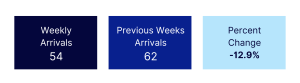
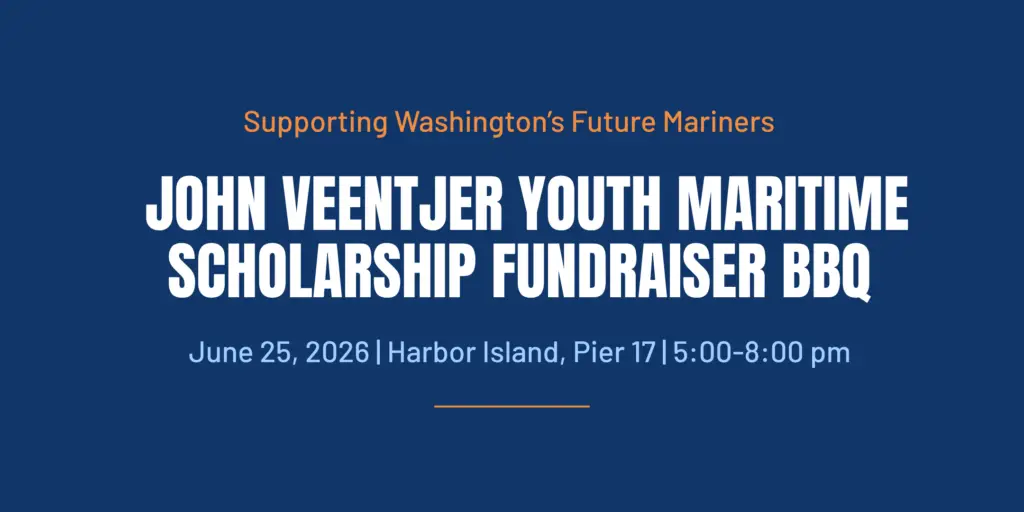
Weekly Roundup: The Sound Is Open for Business, But the World Is Complicated

Cruise season opened in Seattle last Friday. The Norwegian Jade made the first call of the season at Pier 66, and if you were anywhere near the waterfront, you felt the shift. That particular energy — the one that arrives with the first big white ship of the year — is hard to describe to someone who hasn’t worked the water. It’s a combination of relief, anticipation, and the low hum of an economy clicking back into gear.

This week I want to do something a little different. Instead of just reporting what happened, I want to walk you through what our vessel traffic data is actually telling us and why the global picture matters for what we see on the Sound every day.

Because right now, the global picture is genuinely complicated.

The Cruise Season Nobody Expected to Be This Big

330 ship calls running through October 11. Last year’s Alaska cruise season brought 1.9 million passengers and 298 calls. Ya’ll, that’s a hella big meaningful jump.

Two cruise lines are making their Seattle debuts this season: MSC Cruises, out of Geneva, and Virgin Voyages, out of Florida. Both are adding Alaska itineraries for the first time. Sixteen ships will be based out of Seattle for the season. The Port estimates $1.2 billion in economic impact and 5,120 direct and indirect jobs supported by cruise activity.

That is a big number for the waterfront, for the longshoremen, for the restaurant owners around Pike Place, and for the maritime workforce throughout the region. The cruise industry has quietly become one of the most significant economic engines in the Puget Sound maritime economy, and it tends to get underestimated precisely because it looks like tourism rather than industry. It is both.

Worth noting for those of you who follow our vessel tracking data: the passenger arrival count in our year-to-date numbers looks soft right now – down five compared to last year through this week. Don’t read into that. It’s a pre-season artifact. The first ship of cruise season didn’t arrive until April 18. By this time next month, that number will look completely different.

Two Months of Hormuz, and What It Means Here

I’ve been writing about the Strait of Hormuz situation since February, when the U.S.-Israeli air campaign began and Iran moved to restrict tanker traffic through the strait. At its worst, crude oil prices surged toward $150 per barrel — the International Energy Agency called it the largest supply disruption in history, with global oil production falling more than 10 million barrels per day in March alone.

A two-week ceasefire took effect April 7-8, and oil has since come down to roughly $83 per barrel. But here’s the thing about that ceasefire: the ships haven’t come back. An estimated 400 loaded tankers are still trapped inside the Persian Gulf waiting to exit, with virtually no vessels willing to re-enter. Industry analysts from S&P Global Market Intelligence estimate it could take until July for flows to normalize, and that assumes the ceasefire holds, which is far from guaranteed.

In the meantime, shippers and their insurers are making rational decisions. You don’t put a $100 million VLCC into a shooting gallery on the promise of a fragile two-week truce.

So what does this mean for Puget Sound?

Look at the tanker numbers in this week’s data. Cherry Point is holding essentially flat year over year (+1), and Ferndale is up slightly (+4). In the context of a global energy disruption of this scale, that is actually a good story. Our refineries are successfully sourcing from the Pacific Rim — Alaska North Slope, Canadian crude, and Pacific producers — rather than relying on Middle Eastern grades that can no longer reliably move through the strait. We are geographically advantaged in a way that East Coast and Gulf refineries simply are not.

March Point is down significantly in overall arrivals (-14 for the port as a whole), though some of that likely reflects broader demand softening as elevated bunker costs get passed through to cargo customers. Worth watching.

One other Hormuz thread worth following: on March 17, the Administration waived the Jones Act for 60 days to facilitate alternative commodity routing — specifically petroleum and fertilizers that would normally move through the strait. That waiver just got extended another 90 days.

American Waterways Operators called it “a gut punch to American workers and should be terminated immediately.” Its impact on domestic coastal traffic, including movements in and out of Puget Sound ports, is something we’re monitoring closely.

The Tariff Picture: Vehicles Tell the Story

If you want to understand what tariffs are doing to Pacific Northwest trade right now, look at one number: vehicle carrier arrivals are up 16 compared to the same period last year.

Sixteen.

That is front-loading. Importers who move vehicles — cars, trucks, equipment — are racing to get product into the country before further tariff escalation makes it economically unworkable. We’ve seen this behavior in container trade before, but the magnitude of the vehicle surge is striking.

Here’s the broader context. About 90 percent of the Pacific Northwest’s trade is with Asia. China alone accounted for 40 percent of the region’s total trade volume as recently as 2024. With duties on Chinese goods running as high as 145 percent, that relationship is being stress-tested in real time.

Container arrivals in our data are essentially flat year over year (+4), which tells you that throughput is holding even as the individual port picture gets messier. Seattle is down 18 arrivals year to date, while Tacoma is essentially flat (+1). Some of that Seattle decline is noise, but some of it reflects genuine traffic shifts. The Northwest Seaport Alliance has been clear that it is not the time to pull back on service levels, even with softer volumes, and that’s the right call. The worst thing you can do in a volatile trade environment is reduce capacity and reliability exactly when shippers need stability.

The deeper structural concern is what comes next. Both Maersk and Hapag-Lloyd — the two largest container lines in the Gemini alliance — have guided for operating losses in 2026. Hapag-Lloyd closed full-year 2025 with EBIT down 62 percent from the prior year. These are not small companies absorbing small losses. When the major carriers start making network rationalization decisions under financial pressure (dropping port calls, consolidating rotations, reducing Pacific Northwest coverage) the effects land here, at our terminals, on our longshore workforce, in our supply chains.

That dynamic is worth watching very carefully over the next 60 to 90 days, as 2026-27 service contracts get finalized around the May 1 deadline.

The Arctic Is Getting Serious and Seattle Is Part of It

Two pieces of Coast Guard news landed this week that deserve more attention than they’ve received.

First: the Coast Guard confirmed a $323 million investment to modernize Base Seattle on Elliott Bay. The base will serve as the West Coast hub for the new heavy Polar Security Cutter icebreakers, with the first (USCGC Polar Sentinel) expected in 2030. This is a significant piece of infrastructure investment for the Seattle maritime economy, with contracting and labor activity that will flow from it for years.

Second: the Coast Guard announced that the first two new Arctic Security Cutters — medium icebreakers under contract with Finnish shipbuilder Rauma Marine Constructions — will be homeported in Alaska, with delivery expected by the end of 2028. Up to 11 Arctic Security Cutters are under contract, backed by roughly $3.5 billion in funding. Commandant Admiral Kevin Lunday described it as a decisive step to defend the northern border and counter Russian and Chinese Arctic influence.

I want to put this in context for a moment, because it matters for how we think about the long game in Pacific Northwest maritime. Russia operates roughly 40 icebreakers in the polar region and has been developing the Northern Sea Route as a potential dominant trade corridor between Asia and Europe. China is investing heavily in Arctic research and positioning. The United States has been embarrassingly behind for decades.

These are not academic observations. The Arctic is becoming a real maritime operating environment, and the Pacific Northwest, as the nearest major U.S. maritime gateway to the high north, sits at the center of whatever that future looks like. The investments being made at Base Seattle and the ASC homeporting decision in Alaska are the opening moves in a long strategic competition. The fact that we’re finally making them is worth noting.

What the Numbers Are Really Saying

Total berth arrivals are down 38 year over year (795 versus 833). Total pure arrivals (a better measure of actual vessel traffic volume) are essentially flat at +4. I wrote last week about the difference between these two metrics, but the short version is this: the same number of ships are coming into the region, they’re just touching berths differently. Fewer shifts, fewer recalls, possibly faster port operations.

The bigger story in the data is distribution. Aberdeen is up 8, Tacoma is flat, Cherry Point and Ferndale are holding. Everett is down 13, Seattle is down 18, March Point is down 14. Some of that distribution shift reflects the energy story because our northern refineries are sourcing differently. Some of it reflects broader trade softening showing up at the big container ports.

Aberdeen at +8 is quietly one of the more interesting data points. That port punches above its weight in certain commodity flows, and when it runs hot, it’s usually telling you something about bulk cargo demand.

The View From the Bridge

I spent a good part of this week thinking about something that doesn’t show up in vessel traffic data: the peculiar combination of forces acting on this region simultaneously.

We’re entering what should be an exceptionally strong cruise season while simultaneously watching the global energy market try to recover from its worst disruption since the 1970s oil shocks. We’re seeing vehicle imports surge on tariff fear while container lines guide for losses. We’re watching the federal government make its largest icebreaker investment in history while fighting about trade policy in ways that threaten the very trade lanes those icebreakers are meant to protect.

The Sound keeps moving. That’s what it does. But the currents running underneath the surface traffic are freaky right now, and if you work in maritime, in logistics, in port operations, or in any of the industries that depend on global trade moving through this region, you should be paying close attention to all of them at once.

That’s what we’re here for.


Data referenced in this post is drawn from MXPS vessel tracking systems through April 24, 2026.

IMO Delays Global Shipping Carbon Tax: Impact on Washington State Maritime Industry

The extraordinary session will be reconvened in 12 months’ time.

The International Maritime Organization (IMO) voted on October 17, 2025, to delay adoption of the world’s first global carbon pricing system for shipping by one year, following pressure from the U.S., Saudi Arabia, and other oil-producing nations. The Net-Zero Framework, which had majority support (63 countries in favor during April’s vote), would have required ships to pay fees for exceeding carbon intensity targets, generating up to $15 billion annually starting in 2030. The delay vote passed 57-49, with 21 abstentions, after the Trump Administration reportedly threatened retaliatory tariffs against developing nations supporting the framework.

Key Details

  • Original timeline: Framework was set to enter force in March 2027; now delayed until at least October 2026 vote
  • Mechanism: Ships exceeding emissions targets would pay fees; efficient vessels could earn tradable credits
  • Industry impact: Creates uncertainty for investments in decarbonization technologies and alternative fuels
  • Opposition tactics: U.S. and Saudi Arabia attempted procedural changes to make future adoption more difficult

Washington State Context

Port of Seattle Commissioner Fred Felleman’s Response:

Despite the IMO’s postponement, Port of Seattle leadership emphasized local commitment to climate action. Commissioner Felleman stated: “Our environment and economy cannot afford any further delay to address the most pressing issue of the day.” He reaffirmed that the Port of Seattle will continue working with Pacific trade industry leaders, noting that “some of the world’s most successful and progressive industries are based in the Pacific Northwest,” and pledged to provide infrastructure support to help companies meet their greenhouse gas emission goals regardless of international delays.

Regional Implications:

For Washington State’s maritime industry, a critical gateway for Pacific trade, this delay creates a complex situation. While the postponement may provide short-term cost relief for shipping companies using Northwest ports, it also extends regulatory uncertainty that could hinder long-term investments in green maritime infrastructure and alternative fuel capabilities that Seattle and Tacoma have been positioning to support.

Critical Supply Chain Challenges: Cargo Theft, IMO’s Net-Zero Framework, and Infrastructure Breakdowns


The supply chain landscape continues to face mounting challenges on multiple fronts. From surging cargo theft threatening billions in losses to international shipping’s climate regulation revolt, and critical infrastructure projects spiraling out of control, supply chain managers must navigate an increasingly complex environment. Here’s what you need to know about three critical issues shaping the Washington maritime industry today.

1. DOT Takes Action on America’s $35 Billion Cargo Theft Crisis

The Department of Transportation has issued a critical call to action, opening a public comment period through October 20, 2025, seeking industry input on the escalating cargo theft crisis (DOT-OST-2025-1326-0001). This initiative couldn’t come at a more crucial time.

Cargo theft is costing the U.S. transportation system billions annually, involving both opportunistic “straight thefts” of trailers, containers, and loads at truck stops or multimodal distribution hubs and highly coordinated operations conducted by organized criminal networks. The impact extends far beyond financial losses—these crimes disrupt supply chains and in some cases fund broader illicit activities such as narcotics trafficking, counterfeiting, and human smuggling.

The Scale of the Problem

Industry data paints a disturbing picture of the crisis’s magnitude. An estimated 65,000 thefts occurred in 2024, representing about a 40% increase over the prior year. Looking ahead, industry leaders estimate cargo theft will rise 25% in 2025. This represents real disruptions to businesses and consumers alike and is essentially a tax built into the system.

I don’t know about you, but I’ve paid enough.

How You Can Help

The DOT is actively seeking input from:

  • State, metropolitan, and local agencies
  • Law enforcement
  • Carriers, shippers, and drivers
  • Warehouse operators (including at airports)
  • Insurers
  • The general public

Action Required: Submit your comments via Regulations.gov at the docket number DOT-OST-2025-1326 before the October 20, 2025 deadline. Your insights will help shape federal strategies to combat this growing threat.

2. Major Shipowners Revolt Against IMO’s Net-Zero Framework

In an unprecedented move that could reshape global shipping regulations, 15 major shipowners representing more than 1,200 ships and 150 million deadweight tons have issued a joint statement expressing “grave concerns” with the International Maritime Organization’s Net-Zero Framework. The signatories include industry giants like Frontline, GasLog, Bahri, and the Angelicoussis Group.

The Framework at a Glance

Approved at MEPC 83 in April 2025, the IMO Net-Zero Framework is the first in the world to combine mandatory emissions limits and GHG pricing across an entire industry sector. Starting in 2027, large ships will need to meet a new global fuel standard limiting greenhouse gas emissions per unit of fuel used, with goals to reduce fuel intensity by 43% by 2035 compared to 2008 levels.

Why the Revolt Matters

The shipowners’ concerns are both practical and economic:

  1. Unrealistic fuel requirements: The statement noted that shipping today consumes about 3% of global energy, but to meet 2040 targets under current proposals, the industry would require about 50% of expected global production of low-carbon hydrogen intended to serve all industries.
  2. Financial burden: The proposals would raise $20-30 billion annually by 2030 but could “quickly” accumulate more than $300 billion by 2035 if the global fleet lags targets “by as little as 10%.”
  3. Implementation impossibility: The owners argue that “these fundamental issues cannot be resolved by emerging guidelines post-adoption.”

Implications for the Industry

This revolt comes at a critical time, with the framework scheduled for formal adoption at an extraordinary IMO meeting from October 14-17, 2025. The Trump Administration has already unequivocally rejected the proposal, calling it “effectively a global carbon tax on Americans” and threatening retaliation against nations that support it.

For supply chain managers, this regulatory uncertainty creates significant challenges for long-term planning, vessel investments, and fuel strategy decisions. The adoption or rejection of this framework will fundamentally impact shipping costs and operations for decades to come.

Close to home, the Port of Seattle has supported the adoption of alternative marine fuels for years. This statement and lack of support from carriers signals trouble for both the IMO and the Port of Seattle. We can develop all the methanol in the world (for example), but if there is no customer base or safety framework in place, who will be consuming it?

Alternative Fuels is one of 10 topics planned for the National Harbor Safety Conference next March 24-26th at Bell Harbor in Seattle.

Here’s the full list:

  1. Federal Agency Perspectives
  2. Understanding Alternative Fuels
  3. Shipboard Firefighting
  4. Harbor Safety Committee Challenges
  5. The Fragility of the Marine Transportation System
  6. Coordinating Live Exercises
  7. Maritime Workforce Development
  8. Leveraging Existing Safety Campaigns
  9. Lessons Learned from the Francis Scott Key Bridge Allision and Collapse
  10. There’s No Wrong Way to Do It (Harbor Safety Committee Perspectives)

3. I-5 Bridge Replacement: A Case Study in Infrastructure Crisis

The Interstate 5 Bridge Replacement project between Portland and Vancouver has become a cautionary tale of infrastructure planning gone awry, with direct implications for Pacific Northwest shipping and trade.

Spiraling Costs and Delays

Project planners originally estimated the price tag would range from $5 billion to $7.5 billion, with a likely figure of around $6 billion. But legislators now expect the total could reach $10 billion as costs have escalated 30% on transportation projects in the Seattle and Portland regions in recent years.

The timeline has slipped significantly as well. A final environmental review originally supposed to conclude in 2025 is now expected in 2026, with cars potentially not crossing a new bridge until 2032 or 2033. Meanwhile, Vancouver Mayor Anne McEnerny-Ogle warned that construction delays would cost $1 million per day.

Why This Matters for Maritime Trade

The I-5 bridge is a critical link in the Pacific Northwest’s supply chain infrastructure:

  1. Freight mobility: The current bridge creates bottlenecks for trucks moving between the ports of Portland, Vancouver, and Seattle
  2. Port access: Delays and congestion impact container drayage and bulk commodity movements
  3. Regional competitiveness: Infrastructure failures make PNW ports less attractive compared to Southern California alternatives
  4. Economic impact: IBR Program investments aim to improve freight mobility through interchange design improvements and auxiliary lanes to help freight move through the corridor more safely and efficiently.

Political Headwinds

Washington state Rep. John Ley has reached out to U.S. Transportation Secretary Sean Duffy to encourage scrutiny of the project and consider clawing back the $2.1 billion in federal grant dollars. This political uncertainty, combined with cost overruns and delays, exemplifies the broader infrastructure challenges facing American supply chains.

Risking the obvious, we need to get this bridge built. I think a worthy study here is not IF we need certain projects or investments but WHY they become so expensive with increasingly feeble results.

Sam Kaplan from the Center of Excellence of Global Trade and Supply Chain Management in Washington state discusses this phenomenon of rising costs with diminishing returns on a recent Maritime Morning Brief podcast.

Weekly Ship Count Update

From our latest weekly roundup, vessel arrivals at Pacific Northwest ports show mixed patterns:

Berth Arrivals by Port (Week-over-Week)

  • Seattle: 23 arrivals (↓1)
  • Tacoma: 20 arrivals (↑2)
  • Cherry Point: 6 arrivals (↑1)
  • March Point: 6 arrivals (↑1)
  • Total PNW: 63 arrivals (↓2)

Container vessel calls remained relatively stable at 15 arrivals, while vehicle carriers showed a bump up with 8 arrivals (↑3). Tanker traffic increased slightly to 13 arrivals, reflecting steady energy commodity flows through regional refineries.

Looking Ahead: Strategic Considerations

These three issues (cargo theft, shipping regulations, and infrastructure) represent interconnected challenges requiring coordinated responses:

  1. Risk Management: Supply chain managers must factor in increased security costs, potential regulatory compliance expenses, and infrastructure-related delays into their planning
  2. Modal Flexibility: With trucking facing theft risks and infrastructure bottlenecks, consider alternative transportation modes where feasible
  3. Regulatory Engagement: The comment periods for both DOT’s cargo theft initiative and IMO’s framework represent opportunities to shape policy
  4. Infrastructure Advocacy: Support realistic, funded infrastructure projects that enhance rather than complicate supply chain operations
  5. Technology Investment: Consider solutions that provide real-time visibility, enhance security, and optimize routing around infrastructure constraints

Conclusion

The supply chain landscape of late 2025 demands unprecedented agility and strategic thinking. From protecting cargo against sophisticated theft rings to navigating the uncertain waters of environmental regulation and managing around crumbling infrastructure, today’s supply chain professionals face challenges on multiple fronts.

The key to success lies in active engagement, whether commenting on proposed regulations, investing in security measures, or advocating for sensible infrastructure solutions. The decisions made in the coming months, particularly around the IMO framework and major infrastructure projects, will shape supply chain operations for years to come.

Stay informed, stay engaged, and most importantly, make your voice heard in these critical policy discussions. The October 20 deadline for DOT cargo theft comments and the October 14-17 IMO meeting represent immediate opportunities to influence the future of our industry.


Weekly Roundup: A Week of Shifts and Strategic Adjustments

Week Ending: August 8, 2025

The maritime landscape of Puget Sound continues to evolve, with this week’s data revealing significant shifts in vessel traffic patterns that reflect broader economic trends and seasonal adjustments across the Pacific Northwest’s critical port network.


Leadership Update: Senator Liias Steps In

The Marine Exchange of Puget Sound’s upcoming Annual Meeting received an important update this week. While Representative Julia Reed was unable to participate as originally planned, Senator Marko Liias, Chair of the Senate Transportation Committee, has graciously agreed to address Marine Exchange members and participate in a private Q&A session. This high-level engagement underscores the continued importance of maritime infrastructure in Washington State’s economic strategy.

For industry professionals who haven’t yet registered, please do so today as the event is expected to reach capacity. The meeting represents a crucial opportunity for maritime stakeholders to engage directly with key policymakers shaping transportation infrastructure decisions.


Container Traffic Takes a Notable Dip

Perhaps the most striking development this week was the dramatic 45% decline in container vessel arrivals, dropping from 20 to just 11 vessels. This significant reduction likely reflects ongoing supply chain adjustments as the industry continues to navigate post-pandemic logistics patterns and evolving global trade dynamics.

The container shipping decline stands in contrast to other vessel categories, suggesting this may be a sector-specific adjustment rather than a broader economic slowdown affecting all maritime activity.


Tourism and Energy Sectors Show Resilience

While container traffic declined, passenger vessels demonstrated predictable growth with a 17% increase, rising from 12 to 14 arrivals. This uptick aligns with Seattle’s position as a major cruise destination and reflects the continued strength of the Pacific Northwest’s tourism sector.

Tanker operations remained remarkably stable, maintaining exactly 12 arrivals for the second consecutive week. This consistency in energy supply operations indicates steady demand and reliable logistics networks supporting the region’s energy infrastructure.


Regional Distribution Reveals Strategic Patterns

The geographic distribution of vessel arrivals tells an interesting story of regional specialization and market adaptation. While major ports like Seattle and Tacoma saw modest decreases (Seattle down 1, Tacoma down 4), smaller specialized facilities experienced significant growth.

Cherry Point emerged as a standout performer with a 133% increase, jumping from 3 to 7 arrivals. Similarly, Aberdeen doubled its weekly traffic from 1 to 3 vessels, representing a 200% increase. These gains at specialized facilities suggest a strategic shift toward more distributed port operations and potentially more efficient cargo handling at targeted locations.


Seasonal Patterns and Market Adjustments

The 43% decline in bulk cargo arrivals from 7 to 4 vessels reflects predictable seasonal patterns in commodity flows. Bulk cargo operations often follow agricultural and industrial cycles, and this adjustment appears consistent with normal seasonal variations rather than indicating market distress.

Vehicle transport showed healthy growth with a 40% increase, rising from 5 to 7 arrivals. This uptick could reflect continued strength in automotive markets or strategic inventory positioning by manufacturers and dealers.


System Reliability Remains Strong

Despite the various shifts in traffic patterns, the Marine Exchange reports all systems operational with AIS (Automatic Identification System) and radio communications maintaining full functionality. This operational reliability provides the foundation for safe and efficient maritime operations regardless of traffic volume fluctuations.


Looking Ahead

The total weekly arrivals of 63 vessels (up slightly from 62 the previous week) demonstrates the overall resilience of the Puget Sound maritime system. While individual sectors experience natural fluctuations, the port network’s ability to maintain steady overall activity while adapting to changing market conditions speaks to the region’s maritime infrastructure strength.

With an average of six arrivals daily, Puget Sound continues to serve as a critical gateway for Pacific Northwest commerce. The diversity of vessel types and port destinations provides operational flexibility that allows the system to adapt to changing economic conditions and market demands.

As maritime industry leaders and operators prepare for the Annual Meeting with Senator Liias, these traffic patterns will likely inform discussions about infrastructure priorities and policy directions that will shape the region’s maritime future. The data suggests a dynamic, adaptable system well-positioned to meet evolving challenges while maintaining its role as a cornerstone of regional economic activity.


The Marine Exchange of Puget Sound continues to provide critical coordination and communication services supporting safe, efficient maritime operations across the Pacific Northwest’s vital port network.

Weekly Roundup: Arrivals Down, Events on Deck, and a Visit from the Eagle

Vessel activity across Puget Sound slowed this week, even as passenger arrivals continued to climb. While market shifts and global tariffs cast a long shadow, our team is focused on delivering new tools, building momentum for key events, and celebrating the maritime moments that bring our community together.


Vessel Arrivals: Dips Across Most Sectors

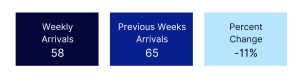
Vessel arrivals fell 11% this week (65 → 58 vessels), led by steep drops in:

  • Container traffic: down 31%
  • Vehicle Carrier traffic: down 29%

Passenger traffic increased by 17% (12 → 14 vessels) as cruise season continues

Berth arrivals dropped 15% (71 → 60), with sharp declines at:

  • March Point: down 42%
  • Port Angeles: 0 arrivals (down from 2)
  • Everett and Aberdeen: each down 2 → 1

Bright spot: Cherry Point climbed +50%


Operational & Tech Updates

AIS Network: Ellis tower is currently receiving repairs.

New Port Directory: We’re working to launching an online Port Directory, set to replace the discontinued Port Handbook. Expect a preview at our Annual Member Meeting in September.


Upcoming Events

Annual Member Meeting
September 11, 2025, Ballard Elks Lodge, 11:00 AM – 1:00 PM
Join us for updates on vessel trends, AIS infrastructure, policy priorities, and a look at what’s ahead in 2026. Lunch is included, parking is free, and we’ll be honoring Rep. Julia Reed with our first-ever Legislator of the Year Award. A private Q&A will follow the program. Learn more and RSVP now.

National Harbor Safety Conference
March 24–25, 2026, Bell Harbor Conference Center, Seattle
The Puget Sound Harbor Safety Committee is proud to host the 2026 National Harbor Safety Conference, with administration by the Marine Exchange. We’ll be welcoming hundreds of industry leaders from across North America for two days of panels, keynotes, networking, and local maritime insight. Learn more & sign up to receive updates.

Sponsorship opportunities available — prospectus coming this week. Contact us if you are interested.


Tariff Watch

The Trump administration announced sweeping new tariffs that could sharply impact Pacific Northwest trade:

  • 35% tariffs on most Canadian goods, effective August 1.
  • 50% tariffs on copper, also starting August 1, under a Section 232 national security claim. Copper is the world’s most important industrial metal.
  • Tariff letters sent to several countries (including Japan, South Korea, Brazil, Philippines), warning of 20–50% duties. Some tariffs were reduced.
  • Tariffs on European Union goods are expected soon; details pending as negotiations continue.

With cargo demand already vulnerable, these moves may strain pricing, volume, and long-range booking decisions for regional shippers and terminals.


Community Highlight: The Eagle In Seattle

This week, we welcomed the USCGC Eagle — known as “America’s Tall Ship” — to Puget Sound. A floating symbol of maritime tradition and Coast Guard training, the Eagle welcomed the public for tours and brough some much needed joy to the maritime community.

I had the opportunity to board her during docking, and it was a powerful reminder of what makes this industry so inspiring. Thank you to Captain and crew for hosting us and opening up your ship to passengers. Wishing everyone aboard the EAGLE a safe voyage home after completing their port calls in Canada.


The Florida Ferry Fiasco: Why We’re Subsidizing Our Competition

By Patrick Gallagher, Executive Director
Marine Exchange of Puget Sound
July 14, 2025


I waited a bit to cool off about Washington State NOT choosing a Washington shipyard to build out a new fleet of state ferries. For a week I sat here thinking a mantra: Washington Values, Florida Paychecks.

Washington Values, Florida Paychecks.

I’ve been wondering why nobody seems overly combative or pissed, and I honestly think it’s because we’re getting used to the Washington maritime industry getting screwed by this state. Gotta ask — when did Washington State decide that “Buy American” meant “Buy Anywhere But Washington?”

This State Has No Comprehensive Maritime Strategy

I get it – this is expensive, and there’s a lot of pressure to restore the long-neglected ferry system (Thanks, Inslee). I’m not certain I’d choose to shop at Whole Foods vs Costco either right now, but I have to ask – REALLY?

We play by Washington’s rules – higher wages, stricter environmental standards, premium real estate costs – and our reward? Watching our tax dollars sail to states that undercut us at every turn.

This is the first out-of-state ferry contract in 50 years, and (let’s be plain) we’re sending at least $714.5 million Washington State dollars to Florida while local shipbuilders get bypassed. I’m sitting here watching almost a billion of our dollars ship off to Florida, and I’ve got some questions.

And let’s be clear, Eastern Shipbuilding is a queen of cost overruns. Just take a hard look at the Coast Guard OPC project, and you’re looking at our future. Just think for a minute that the contracting officers should have been driving to Everett instead of flying to the Florida panhandle. Local has benefits that are impossible to measure.

The Big Dark vs. Florida Sunshine

We’re sending Washington money to a place that’s never seen a Puget Sound winter. They know nothing of The Big Dark, July flannel weather, salmon runs, Vitamin D deficiency. We’ve got the most kick-ass technology companies in the world, but we can’t manage to deliver contracts to local shipbuilders. We can code a billion-dollar app but can’t bid a competitive ferry.

So we operate in misty darkness for half the year, but apparently we’re supposed to compete in the bright Florida sunshine when it comes to pricing. I don’t want to get overly dramatic, but Sub Pop Records kept it local – why can’t ferry contracts?

Built for the Pacific Northwest, funded by the Pacific Northwest, constructed in the Gulf of America. Yeah, I’m pissed.

This Place Made Us Who We Are

I LOVE this place. I LOVE this industry here because this place and this water gave me everything I have.

We built the maritime economy that made the Pacific Northwest a global powerhouse. Seattle/Tacoma wouldn’t be Seattle/Tacoma without maritime. Then, we developed the environmental standards, workforce protections, and safety regulations that became the gold standard for the industry. As a relative outsider, I can verify that nobody does this better than us. Now we’re being penalized for our own success.

Every dollar we send to Florida is a dollar that won’t hire a Washington welder, support a local supplier, or strengthen our maritime infrastructure. I won’t pretend to understand the whole of economics, but fewer dollars on the waterfront means fewer happy hour beers and Taco Tuesdays. There will be fewer apprenticeships.

Fewer people will get married, and fewer people will have kids. Yeah, this is what this means.

We’re not just losing a contract – we’re funding the erosion of our own competitive advantage.

Time to Fight Back

This needs to stop. We need a comprehensive maritime strategy. We’ve needed it for a generation.

The question isn’t whether we can build these ferries. The question is whether we still want to.

I’m ready to scrap. I’m ready to defend what should be ours.

This is exactly why we need strong maritime advocacy in Olympia. Join us at the MXPS Annual Meeting on September 11th to discuss how we fight back.

Register for the Annual Meeting


The Marine Exchange of Puget Sound has been advocating for Washington’s maritime community since 1980. We provide 24/7 vessel tracking, industry intelligence, and policy advocacy to support safe, secure, and efficient maritime operations in the Pacific Northwest.

Weekly Roundup: Global Ripples, Local Traffic

As the maritime world braces for geopolitical shifts, tariff changes, and supply chain tremors, Puget Sound continues to offer a front-row seat to how global currents shape regional activity. Here’s a concise view of what moved this week—from vessel and berth trends to policy headlines and the future of Coast Guard support.


Vessel & Berth Trends: A Solid Uptick (!)

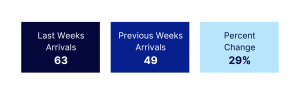
Vessel Arrivals rose by 29% (49 → 63 vessels), driven by sharp increases in:

  • Bulk cargo: up 167%
  • Tug/ATB movements: up 300%
  • Vehicle shipments: up 60%

Berth Arrivals climbed 26% (54 → 68), with standout gains in:

  • Tacoma: up 71%
  • Cherry Point: up 100%
  • March Point: up 40%

These surges point to rising industrial throughput, repositioning ahead of summer fuel runs, and shifting terminal capacity across the Sound.


Operational Snapshot

All seven AIS towers in our network reported 100% uptime with clean, uninterrupted transmissions.


Policy Pulse: From State Law to Global Trade

Washington State Legislative 

Changes (Effective July 27, 2025):

  • SB 5191: Expands paid leave for maritime workers
  • HB 1167: Strengthens maritime education in schools
  • HB 1511: Increases pay for ferry captains and deck officers

Federal Developments:

  • Imports at the Ports of Los Angeles and Long Beach dropped 24% in May—the lowest since mid-2023.
  • Spot shipping rates (Shanghai to West Coast) fell nearly 7% after early summer highs.
  • The USTR backed off proposed penalties on non-U.S. LNG tankers and vehicle carriers, attempting to ease supply chain pressures.

Spotlight: Coast Guard Funding in Limbo

Despite unanimous Senate approval of S. 524, the Coast Guard Authorization Act of 2025, the bill is stalled in the House. Majority Leader Steve Scalise announced it won’t be brought to a vote, delaying key funding and reforms.

Meanwhile, the FY2026 DHS budget proposal slashes shore infrastructure funding from $400 million to just $21 million. This comes despite a well-documented $7 billion backlog in repairs and modernization needs.

These delays have direct implications for Coast Guard readiness—and by extension, for everyone operating in our waters.


Final Take: Why It Matters

Vessel and berth volumes are signals. Changes in traffic reflect more than cargo flows; they echo policy shifts, labor movements, and geopolitical uncertainty.

A resilient maritime system isn’t just built on ships and terminals—it’s built on coordination, infrastructure, and well-supported public service partners like the U.S. Coast Guard.

At the Marine Exchange, we’ll continue tracking the data, maintaining uptime, and telling the story behind the numbers.


Let’s Stay Connected

What are you seeing in your corner of the maritime world? How are these national and global changes showing up at your dock?

Weekly Roundup: Arrivals Lag, Maritime Laws Land, Youth Fundraiser Gains Steam

Executive Summary

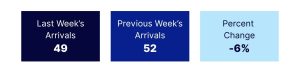
Vessel activity dipped last week across Washington ports — a concerning trend given the ongoing cruise season. Overall arrivals dropped from 52 to 49, continuing a downward trajectory when our seasonal average should be topping 60.

Notable Changes:
  • Tanker arrivals rose +29% (from 7 to 9)
  • General cargo fell to 0 (from 2)
  • Container ships dipped slightly (–6%)
  • Passenger traffic held steady at 13 vessels

Operations & Technology

  • New Data Access Tool: We’ve signed a contract to build an API for real-time watch floor data. Once live, members will be able to integrate live traffic insights into their own operational platforms.
  • AIS Network Status: All 7 receiver towers are fully operational with 100% uptime this week.

Policy & Legislative Update

New maritime laws take effect on July 27, 2025, with implications for ferry staffing, paid leave, and youth maritime training:

  • HB 1167 – Expands maritime education
  • SB 5191 – Enacts paid family leave coverage for dockworkers
  • HB 1511 – Ferry captain salary updates
  • SB 5794 – Big win for Washington Maritime because we successfully pursued WA legislation: Tax rollback goes into effect Jan 1, 2026
  • SB 5281 – A pro-tourism vessel permit, easing nonresident vessel rule (effective Sept 1, 2025)

Spotlight: Global Trade Fog, Local Impact

The Trump-era spike to 145% tariffs on Chinese imports—now eased to a much hyped yet still-punishing 55% total average (without clear or transparent agreements established yet) —has contributed to perpetual market confusion that we’ve yet to fully work out. It’s very hard to say what the long-term trend is for us in PacNW, but overall it’s not looking good for the remaining 2025 and early 2026 ship count.

Ships are still arriving in the US but with less cargo onboard, yet ocean carrier bookings are at near full capacity. What a paradox of the market (!), right? yet it sort of makes sense in that we still need to move cargo that meets economic muster, so there’s got to be an expense ratio that is still profitable.


Scholarship Success – Thank You!

What a day! Our first annual John Veentjer Youth Maritime Scholarship Fundraiser Cruise aboard the Virginia V was a huge success — raising nearly $10,000 to support young people pursuing maritime careers.

It was an incredible day on the water, with sunshine, good company, and powerful stories. Chloe, a graduate of the inaugural Maritime High school class and future mariner, shared her journey and plans to attend Cal Maritime this fall. Many attendees shared memories of the Virginia V — and for many like us, it was their first time taking her out on a cruise.

If you were not able to make it, there’s still time to support the fund. We’ll continue fundraising through the year, with scholarships awarded in May 2026 in partnership with YMTA. Donate here to help us keep the momentum going and support the next generation of maritime professionals.

Weekly Roundup: Succession, Sanity, and Staying the Course

Vessel Traffic: Holding Steady, Trending Up

We recorded a 22% increase in overall commercial vessel arrivals this week, driven by bulk and container ships. That’s a healthy sign of activity, even as other indicators flash yellow.

Total Arrivals: 43 → 55
Notable gains:

  • Bulk: +64%

  • Containers: +29%

  • General cargo: +200%

Berth Arrivals: 47 → 59 (up 20%)

  • Seattle up 24%, March Point up 43%, Aberdeen and Anacortes back online

  • Port Angeles: 0 arrivals

Operations Snapshot

  • We continue to experience radio outages at Ellis Tower and are evaluating rerouting options.

  • Met with the incoming Coast Guard Sector Puget Sound Prevention Department Head to strengthen future collaboration.


Legislative Update: No Major Shifts This Week

Most priority bills have passed and are now awaiting effective dates. A few remain in review, and we’re watching closely for signs of a special session to finalize the state budget.

Bills Passed & Awaiting Implementation:

  • HB 1167 – Maritime education in career & technical programs (Effective 7/27)

  • SB 5281 – Nonresident vessel permits (Effective 9/1)

  • SB 5191 – Paid family leave for dockworkers

  • SB 5161 – 2025–27 transportation appropriations

  • HB 1511 – Ferry captain authority clarified (Effective 7/27)

  • HB 1414 – Student career access (Effective 7/27)

  • HB 1264 – Ferry system salaries

  • SB 5794 – Tax preference repeal (Marine Exchange opposes)

Bills We’re Monitoring:

  • SB 5160 / HB 1226 – Supplemental transportation budget

  • SB 5550 / HB 1324 – CCA-funded transportation investment

Under Review:

  • SB 5652 – Environmental equity in port communities

  • SB 5519 / HB 1652 – Low sulfur marine fuel standards

  • HB 1684, HB 1513, HB 1678 – Coastal, conservation, and infrastructure bills

Didn’t Advance:

  • SB 5248 – Bridge collision prevention

  • HB 1689 – Emissions at berth

  • HB 1288 – Outdoor rec & climate adaptation

Spotlight: Where Are All the Mariners?

We’ve got a succession crisis in maritime—and it’s not hypothetical. Pilots are aging out. Engineers are retiring. Tug captains and dispatchers are slowly slipping out of the workforce. And there’s no wave of new talent waiting in the wings.

At a recent Olympic Coast National Marine Sanctuary meeting, someone mentioned they couldn’t find a line handler for their research vessel. That’s not a blip—that’s a system strain.

If we don’t bring in the next generation, there will be:

  • No ships

  • No terminals

  • No ferries

  • No working waterfront

This industry gave me everything. A mission. A living. A life. And now, it’s our job to ensure someone else gets that same shot.

Help Us Build the Next Generation

We launched the John Veentjer Maritime Scholarship to break down barriers and open doors. These are unrestricted scholarships—fast, flexible, and designed to put money on target with as few speed bumps as possible.

We’re hosting a fundraiser cruise on June 12 aboard the Virginia V. Can’t attend? No problem. Just donate. It matters.

👉 DONATE OR JOIN US

Upcoming Events – Week of May 19

  • Monday – PNWER Cross-Border Supply Chain Workshop (Bellingham)

  • Tuesday – Puget Sound Marine Firefighting Commission (online)

  • Wednesday – ECHO Vessel Operators Committee

  • Thursday – Marine Insurance Association of Seattle: Day of Education

Final Word: Tariff Who? Tariff What?

The Trump Administration called for a 90-day tariff pause on Chinese imports—and the markets barely blinked. That tells you everything.

This isn’t trade strategy. It’s policy whiplash dressed up in populist cosplay. And once again, the people getting punished are port communities like ours—workers, exporters, logistics firms, and mariners.

If it feels like nobody wants to talk about this, but everyone is talking about it—you’re not imagining things.

The tide is shifting. Let’s keep our heads above water—and bring the next crew aboard while we still can.

Weekly Roundup: Strong Vessel Traffic, Legislative Wins, and Navigating Uncertain Waters

This week brought a welcome boost to vessel activity across Puget Sound, along with some important progress on the legislative front. As spring weather delivered record-breaking warmth, the Marine Exchange stayed busy supporting ship arrivals, hosting industry partners, and advancing critical maritime policy work. Here’s a closer look at what happened this week:

Vessel Traffic Surges 27%

Vessel arrivals jumped significantly, with a 27% increase compared to last week. Container traffic rose 29%, vehicle carriers surged 78%, and tanker arrivals grew by 22%. Passenger traffic also picked up as cruise season edges closer, recording a 67% rise in vessel counts.

Seattle and Tacoma continued to anchor the region’s activity, each seeing double-digit increases in port arrivals. March Point also saw a 43% boost, reinforcing the importance of our fuel supply chain hubs.

It’s an encouraging sign that Puget Sound remains an essential gateway, even as global shipping markets wrestle with rising uncertainty.

Scholarship Fundraiser: Cruise Aboard the Virginia V

We’re thrilled to announce the launch of the JV Maritime Scholarship Fundraiser Cruise, happening June 12th aboard the historic Virginia V on Lake Union.

This event supports maritime career pathways for the next generation. Come enjoy an evening on the water and help us invest in the future of our industry! Learn more and register here.

Community Connections: Society of Naval Architects & Marine Engineers (SNAME)

This week, we hosted members of SNAME for an information exchange and networking event. The Marine Exchange is proud to foster collaboration across disciplines, bringing together operational expertise, engineering innovation, and academic leadership to strengthen the maritime sector.

Legislative Update: Wins for Washington’s Maritime Future

This week delivered several key victories in Olympia:

  • SB 5794: Major opposition success — harmful tax provisions removed before passage.

  • HB 1264: Delivered to the Governor — supporting collective bargaining for ferry workers.

  • Career and Maritime Education Bills: Creating new pathways into maritime jobs — both bills heading to the Governor’s desk.

  • Vessel Permit Modernization and Paid Family Leave for Dockworkers: Progressing with strong bipartisan support.

These outcomes reflect months of advocacy and coalition-building. We’ll continue tracking remaining bills as the session closes.

Technology & Data: AIS and Cloud Modernization

All 7 of our AIS receiver towers remain fully operational with 99.9%+ uptime. Work continues to migrate our ship database to a new cloud platform — setting the stage for more advanced API connections, automated backups, and greater system resilience.

We’re still awaiting a hardware repair at Ellis, but no major disruptions have been noted.

Spotlight of the Week: Red Light/Green Light on Trade

Global trade is flashing warning signals. Between new tariff threats, rising gold prices, currency volatility, and skyrocketing national debt, the economic backdrop feels increasingly unstable. Goldman Sachs just doubled its probability estimate for a U.S. recession in the next year.

While it’s too early to predict exactly how this will hit Washington’s ports, we’re closely watching indicators like:

  • Rising blank sailings (canceled voyages)

  • Increased abandoned cargo rates

  • Shifts in job reports and inflation rates

The Marine Exchange will stay vigilant, providing real-time insights and operational support as conditions evolve.


Thanks for staying connected with the Marine Exchange. We’re proud to serve the Puget Sound maritime community, ensuring safe, efficient, and resilient operations — no matter what waters we find ourselves navigating.

If you haven’t yet, don’t forget to reserve your spot for the Virginia V Scholarship Cruise!