Weekly Roundup: The Sound Is Open for Business, But the World Is Complicated

Cruise season opened in Seattle last Friday. The Norwegian Jade made the first call of the season at Pier 66, and if you were anywhere near the waterfront, you felt the shift. That particular energy — the one that arrives with the first big white ship of the year — is hard to describe to someone who hasn’t worked the water. It’s a combination of relief, anticipation, and the low hum of an economy clicking back into gear.

This week I want to do something a little different. Instead of just reporting what happened, I want to walk you through what our vessel traffic data is actually telling us and why the global picture matters for what we see on the Sound every day.

Because right now, the global picture is genuinely complicated.

The Cruise Season Nobody Expected to Be This Big

330 ship calls running through October 11. Last year’s Alaska cruise season brought 1.9 million passengers and 298 calls. Ya’ll, that’s a hella big meaningful jump.

Two cruise lines are making their Seattle debuts this season: MSC Cruises, out of Geneva, and Virgin Voyages, out of Florida. Both are adding Alaska itineraries for the first time. Sixteen ships will be based out of Seattle for the season. The Port estimates $1.2 billion in economic impact and 5,120 direct and indirect jobs supported by cruise activity.

That is a big number for the waterfront, for the longshoremen, for the restaurant owners around Pike Place, and for the maritime workforce throughout the region. The cruise industry has quietly become one of the most significant economic engines in the Puget Sound maritime economy, and it tends to get underestimated precisely because it looks like tourism rather than industry. It is both.

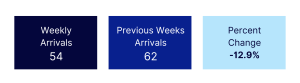
Worth noting for those of you who follow our vessel tracking data: the passenger arrival count in our year-to-date numbers looks soft right now – down five compared to last year through this week. Don’t read into that. It’s a pre-season artifact. The first ship of cruise season didn’t arrive until April 18. By this time next month, that number will look completely different.

Two Months of Hormuz, and What It Means Here

I’ve been writing about the Strait of Hormuz situation since February, when the U.S.-Israeli air campaign began and Iran moved to restrict tanker traffic through the strait. At its worst, crude oil prices surged toward $150 per barrel — the International Energy Agency called it the largest supply disruption in history, with global oil production falling more than 10 million barrels per day in March alone.

A two-week ceasefire took effect April 7-8, and oil has since come down to roughly $83 per barrel. But here’s the thing about that ceasefire: the ships haven’t come back. An estimated 400 loaded tankers are still trapped inside the Persian Gulf waiting to exit, with virtually no vessels willing to re-enter. Industry analysts from S&P Global Market Intelligence estimate it could take until July for flows to normalize, and that assumes the ceasefire holds, which is far from guaranteed.

In the meantime, shippers and their insurers are making rational decisions. You don’t put a $100 million VLCC into a shooting gallery on the promise of a fragile two-week truce.

So what does this mean for Puget Sound?

Look at the tanker numbers in this week’s data. Cherry Point is holding essentially flat year over year (+1), and Ferndale is up slightly (+4). In the context of a global energy disruption of this scale, that is actually a good story. Our refineries are successfully sourcing from the Pacific Rim — Alaska North Slope, Canadian crude, and Pacific producers — rather than relying on Middle Eastern grades that can no longer reliably move through the strait. We are geographically advantaged in a way that East Coast and Gulf refineries simply are not.

March Point is down significantly in overall arrivals (-14 for the port as a whole), though some of that likely reflects broader demand softening as elevated bunker costs get passed through to cargo customers. Worth watching.

One other Hormuz thread worth following: on March 17, the Administration waived the Jones Act for 60 days to facilitate alternative commodity routing — specifically petroleum and fertilizers that would normally move through the strait. That waiver just got extended another 90 days.

American Waterways Operators called it “a gut punch to American workers and should be terminated immediately.” Its impact on domestic coastal traffic, including movements in and out of Puget Sound ports, is something we’re monitoring closely.

The Tariff Picture: Vehicles Tell the Story

If you want to understand what tariffs are doing to Pacific Northwest trade right now, look at one number: vehicle carrier arrivals are up 16 compared to the same period last year.

Sixteen.

That is front-loading. Importers who move vehicles — cars, trucks, equipment — are racing to get product into the country before further tariff escalation makes it economically unworkable. We’ve seen this behavior in container trade before, but the magnitude of the vehicle surge is striking.

Here’s the broader context. About 90 percent of the Pacific Northwest’s trade is with Asia. China alone accounted for 40 percent of the region’s total trade volume as recently as 2024. With duties on Chinese goods running as high as 145 percent, that relationship is being stress-tested in real time.

Container arrivals in our data are essentially flat year over year (+4), which tells you that throughput is holding even as the individual port picture gets messier. Seattle is down 18 arrivals year to date, while Tacoma is essentially flat (+1). Some of that Seattle decline is noise, but some of it reflects genuine traffic shifts. The Northwest Seaport Alliance has been clear that it is not the time to pull back on service levels, even with softer volumes, and that’s the right call. The worst thing you can do in a volatile trade environment is reduce capacity and reliability exactly when shippers need stability.

The deeper structural concern is what comes next. Both Maersk and Hapag-Lloyd — the two largest container lines in the Gemini alliance — have guided for operating losses in 2026. Hapag-Lloyd closed full-year 2025 with EBIT down 62 percent from the prior year. These are not small companies absorbing small losses. When the major carriers start making network rationalization decisions under financial pressure (dropping port calls, consolidating rotations, reducing Pacific Northwest coverage) the effects land here, at our terminals, on our longshore workforce, in our supply chains.

That dynamic is worth watching very carefully over the next 60 to 90 days, as 2026-27 service contracts get finalized around the May 1 deadline.

The Arctic Is Getting Serious and Seattle Is Part of It

Two pieces of Coast Guard news landed this week that deserve more attention than they’ve received.

First: the Coast Guard confirmed a $323 million investment to modernize Base Seattle on Elliott Bay. The base will serve as the West Coast hub for the new heavy Polar Security Cutter icebreakers, with the first (USCGC Polar Sentinel) expected in 2030. This is a significant piece of infrastructure investment for the Seattle maritime economy, with contracting and labor activity that will flow from it for years.

Second: the Coast Guard announced that the first two new Arctic Security Cutters — medium icebreakers under contract with Finnish shipbuilder Rauma Marine Constructions — will be homeported in Alaska, with delivery expected by the end of 2028. Up to 11 Arctic Security Cutters are under contract, backed by roughly $3.5 billion in funding. Commandant Admiral Kevin Lunday described it as a decisive step to defend the northern border and counter Russian and Chinese Arctic influence.

I want to put this in context for a moment, because it matters for how we think about the long game in Pacific Northwest maritime. Russia operates roughly 40 icebreakers in the polar region and has been developing the Northern Sea Route as a potential dominant trade corridor between Asia and Europe. China is investing heavily in Arctic research and positioning. The United States has been embarrassingly behind for decades.

These are not academic observations. The Arctic is becoming a real maritime operating environment, and the Pacific Northwest, as the nearest major U.S. maritime gateway to the high north, sits at the center of whatever that future looks like. The investments being made at Base Seattle and the ASC homeporting decision in Alaska are the opening moves in a long strategic competition. The fact that we’re finally making them is worth noting.

What the Numbers Are Really Saying

Total berth arrivals are down 38 year over year (795 versus 833). Total pure arrivals (a better measure of actual vessel traffic volume) are essentially flat at +4. I wrote last week about the difference between these two metrics, but the short version is this: the same number of ships are coming into the region, they’re just touching berths differently. Fewer shifts, fewer recalls, possibly faster port operations.

The bigger story in the data is distribution. Aberdeen is up 8, Tacoma is flat, Cherry Point and Ferndale are holding. Everett is down 13, Seattle is down 18, March Point is down 14. Some of that distribution shift reflects the energy story because our northern refineries are sourcing differently. Some of it reflects broader trade softening showing up at the big container ports.

Aberdeen at +8 is quietly one of the more interesting data points. That port punches above its weight in certain commodity flows, and when it runs hot, it’s usually telling you something about bulk cargo demand.

The View From the Bridge

I spent a good part of this week thinking about something that doesn’t show up in vessel traffic data: the peculiar combination of forces acting on this region simultaneously.

We’re entering what should be an exceptionally strong cruise season while simultaneously watching the global energy market try to recover from its worst disruption since the 1970s oil shocks. We’re seeing vehicle imports surge on tariff fear while container lines guide for losses. We’re watching the federal government make its largest icebreaker investment in history while fighting about trade policy in ways that threaten the very trade lanes those icebreakers are meant to protect.

The Sound keeps moving. That’s what it does. But the currents running underneath the surface traffic are freaky right now, and if you work in maritime, in logistics, in port operations, or in any of the industries that depend on global trade moving through this region, you should be paying close attention to all of them at once.

That’s what we’re here for.


Data referenced in this post is drawn from MXPS vessel tracking systems through April 24, 2026.

Weekly Roundup: A Week of Shifts and Strategic Adjustments

Week Ending: August 8, 2025

The maritime landscape of Puget Sound continues to evolve, with this week’s data revealing significant shifts in vessel traffic patterns that reflect broader economic trends and seasonal adjustments across the Pacific Northwest’s critical port network.


Leadership Update: Senator Liias Steps In

The Marine Exchange of Puget Sound’s upcoming Annual Meeting received an important update this week. While Representative Julia Reed was unable to participate as originally planned, Senator Marko Liias, Chair of the Senate Transportation Committee, has graciously agreed to address Marine Exchange members and participate in a private Q&A session. This high-level engagement underscores the continued importance of maritime infrastructure in Washington State’s economic strategy.

For industry professionals who haven’t yet registered, please do so today as the event is expected to reach capacity. The meeting represents a crucial opportunity for maritime stakeholders to engage directly with key policymakers shaping transportation infrastructure decisions.


Container Traffic Takes a Notable Dip

Perhaps the most striking development this week was the dramatic 45% decline in container vessel arrivals, dropping from 20 to just 11 vessels. This significant reduction likely reflects ongoing supply chain adjustments as the industry continues to navigate post-pandemic logistics patterns and evolving global trade dynamics.

The container shipping decline stands in contrast to other vessel categories, suggesting this may be a sector-specific adjustment rather than a broader economic slowdown affecting all maritime activity.


Tourism and Energy Sectors Show Resilience

While container traffic declined, passenger vessels demonstrated predictable growth with a 17% increase, rising from 12 to 14 arrivals. This uptick aligns with Seattle’s position as a major cruise destination and reflects the continued strength of the Pacific Northwest’s tourism sector.

Tanker operations remained remarkably stable, maintaining exactly 12 arrivals for the second consecutive week. This consistency in energy supply operations indicates steady demand and reliable logistics networks supporting the region’s energy infrastructure.


Regional Distribution Reveals Strategic Patterns

The geographic distribution of vessel arrivals tells an interesting story of regional specialization and market adaptation. While major ports like Seattle and Tacoma saw modest decreases (Seattle down 1, Tacoma down 4), smaller specialized facilities experienced significant growth.

Cherry Point emerged as a standout performer with a 133% increase, jumping from 3 to 7 arrivals. Similarly, Aberdeen doubled its weekly traffic from 1 to 3 vessels, representing a 200% increase. These gains at specialized facilities suggest a strategic shift toward more distributed port operations and potentially more efficient cargo handling at targeted locations.


Seasonal Patterns and Market Adjustments

The 43% decline in bulk cargo arrivals from 7 to 4 vessels reflects predictable seasonal patterns in commodity flows. Bulk cargo operations often follow agricultural and industrial cycles, and this adjustment appears consistent with normal seasonal variations rather than indicating market distress.

Vehicle transport showed healthy growth with a 40% increase, rising from 5 to 7 arrivals. This uptick could reflect continued strength in automotive markets or strategic inventory positioning by manufacturers and dealers.


System Reliability Remains Strong

Despite the various shifts in traffic patterns, the Marine Exchange reports all systems operational with AIS (Automatic Identification System) and radio communications maintaining full functionality. This operational reliability provides the foundation for safe and efficient maritime operations regardless of traffic volume fluctuations.


Looking Ahead

The total weekly arrivals of 63 vessels (up slightly from 62 the previous week) demonstrates the overall resilience of the Puget Sound maritime system. While individual sectors experience natural fluctuations, the port network’s ability to maintain steady overall activity while adapting to changing market conditions speaks to the region’s maritime infrastructure strength.

With an average of six arrivals daily, Puget Sound continues to serve as a critical gateway for Pacific Northwest commerce. The diversity of vessel types and port destinations provides operational flexibility that allows the system to adapt to changing economic conditions and market demands.

As maritime industry leaders and operators prepare for the Annual Meeting with Senator Liias, these traffic patterns will likely inform discussions about infrastructure priorities and policy directions that will shape the region’s maritime future. The data suggests a dynamic, adaptable system well-positioned to meet evolving challenges while maintaining its role as a cornerstone of regional economic activity.


The Marine Exchange of Puget Sound continues to provide critical coordination and communication services supporting safe, efficient maritime operations across the Pacific Northwest’s vital port network.

Weekly Roundup: Vessel Traffic & Community Connects

Communications Director, Sara Zeman, at Feet Week 2025

Week Ending: August 8, 2025


Vessel Arrivals This Week

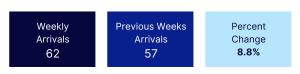
Total berth arrivals: 62 vessels (up from 57 last week, up 8.8%)

Container and tanker traffic both climbed sharply this week, with container arrivals up 43% (14 → 20) and tankers up 71% (7 → 12). Bulk traffic also rose by 40%. General cargo, however, dropped off completely after six arrivals last week. Passenger vessel traffic dipped slightly, and vehicle and Ro/Ro movements remained steady.


Berth Arrivals by Port

Seattle remained stable with 26 vessel calls, while Tacoma rose 18% with three additional arrivals. March Point, Ferndale, and several smaller ports like Aberdeen, Bellingham, and Port Angeles all saw modest gains. In contrast, Everett dropped significantly from five vessels to just one — the largest decline across the region.


System Status Report

AIS Coverage: All seven monitored AIS stations are operational.

Radio Communications: Buck Station & Ellis Station remain operational.

No disruptions were reported in critical communication or tracking systems this week.


Week Ahead Outlook

Looking ahead, we expect continued strength in container and tanker traffic, with energy trade and cargo flows remaining steady. General cargo movements may return to baseline after this week’s zero activity. Passenger vessel activity is expected to remain consistent as seasonal patterns settle.


Community Highlight: Connecting at Fleet Week

The Marine Exchange team had a great time engaging with the public during SeaFari Fleet Week, where we staffed a booth to help connect the maritime community with resources, knowledge, and career insight. Hundreds of visitors, from seasoned industry professionals to curious kids, stopped by to ask questions, share stories, and pick up our latest materials.

We fielded questions about AIS tracking, general on-water operations, maritime careers, and how local organizations can better connect across the sector. It was a reminder of how valuable these public-facing events are for education and outreach.

As an organization deeply embedded in every layer of Puget Sound’s maritime operations, we’re proud to serve as a bridge between industry and the public. If you weren’t able to attend and would like vessel data cards, a copy of the annual report, or other resources, just send us a note — we’re happy to share.


Weekly Roundup: Steady Port Activity Masks Significant Cargo Mix Shift in Puget Sound Waters

washington state maritime industrial waterfront and port infrastructure

Weekly Maritime Intelligence Report from the Marine Exchange of Puget Sound

This week’s vessel traffic data reveals an intriguing story beneath the surface of seemingly stable arrival numbers. While overall berth arrivals remained virtually unchanged at 60 vessels (down marginally from 61 last week), the composition of traffic tells a more dynamic tale of shifting maritime patterns across Washington State ports.

Key Performance Indicators

The headline numbers show remarkable stability in our region’s maritime gateway function:

  • Total arrivals: 60 vessels (-2% week-over-week)
  • Leading port: Seattle maintained its dominance with 26 arrivals (+18%)
  • Container traffic: Steady at 14 arrivals, indicating stable trans-Pacific trade flows

The General Cargo Surge: A Signal Worth Watching

Perhaps the most significant development this week was the dramatic return of general cargo vessels to our waters. After recording zero arrivals last week, this category surged to 6 vessels—a swing that demands attention from port operators and logistics professionals alike.

This influx of general cargo vessels typically signals one of several developments:

  • Project cargo movements supporting major infrastructure initiatives
  • Breakbulk operations indicating industrial expansion or equipment imports
  • Seasonal shifts in cargo patterns requiring specialized handling

For supply chain managers and port planners, this volatility in general cargo arrivals underscores the importance of maintaining flexible berth allocation strategies and ensuring adequate heavy-lift capabilities remain available.

Port-by-Port Analysis: Winners and Challenges

Growth Leaders

  • Everett: Impressive 67% increase (3 to 5 arrivals)
  • Cherry Point & March Point: Both refineries saw 25% increases
  • Seattle: Continued strength with 18% growth, cementing its regional leadership

Areas of Concern

Three ports—Aberdeen, Olympia, and Port Angeles—recorded zero arrivals this week, a stark reminder of the uneven distribution of maritime activity across our region. Aberdeen’s drop from 5 arrivals to none particularly stands out and warrants monitoring for potential operational or market-driven factors.

Sector Performance Insights

The vessel mix data reveals several trends that maritime stakeholders should factor into their planning:

  1. Passenger vessels continued their strong performance (+17%), reflecting robust cruise season activity
  2. Tanker traffic declined 22%, potentially indicating shifts in energy logistics or refinery maintenance schedules
  3. Container and bulk cargo remained flat, suggesting stable but uninspiring trade volumes

Year-to-Date Context: A Broader Perspective

July’s comprehensive data provides valuable context for understanding current trends:

  • YTD growth: +1.6% overall, indicating modest but positive expansion
  • Passenger segment: +7.7% YTD, confirming the cruise industry’s strong recovery
  • ATB movements: -25% YTD, signaling a significant shift in regional energy transport patterns

This divergence between growing passenger traffic and declining ATB movements illustrates the evolving nature of our maritime economy, with implications for port infrastructure investment and workforce planning.

Operational Excellence Maintained

All AIS towers remain fully operational, ensuring comprehensive vessel tracking capabilities across Puget Sound. This technical reliability underpins the safety and efficiency of our waterways, particularly crucial as we navigate the complexities of mixed vessel traffic patterns.

Strategic Implications for Maritime Leaders

For executives and policymakers, this week’s data suggests several action items:

  1. Infrastructure Planning: The volatility in general cargo arrivals highlights the need for flexible, multi-purpose terminal capabilities
  2. Market Intelligence: The stark differences between ports underscore the importance of sub-regional market analysis
  3. Energy Transition: Declining tanker and ATB traffic may reflect broader shifts in regional energy infrastructure requiring strategic adaptation

Looking Ahead

As we monitor these evolving patterns, key questions emerge:

  • Will the general cargo surge represent a new trend or prove to be an anomaly?
  • Can smaller ports like Aberdeen reverse their declining traffic patterns?
  • How will container repositioning challenges affect future vessel calls?

The maritime industry’s ability to adapt to these shifting patterns will determine the competitiveness of our regional ports in an increasingly dynamic global trade environment.


Patrick Gallagher is the Executive Director of the Marine Exchange of Puget Sound. This analysis is part of the weekly Gallagher Report series, providing data-driven insights for maritime industry leaders.

Weekly Roundup: Drops Continue, Command Change, and European Trade

Period Covered: July 18–25, 2025


Vessel Arrivals

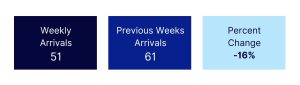
51 vessels (down from 61 last week, down 16%)

This week brought sharp declines across most vessel categories. Container traffic fell 18%, tanker arrivals dropped 25%, and tug/ATB were down 67%. No general cargo vessels called this week, while bulker and Ro/Ro traffic were the only segments to see an increase.


Operational Notes

All seven AIS towers were online this week, though Ellis and Buck reported intermittent outages throughout the period.


Container Volume Trends: Up, But Misleading

NWSA’s June 2025 TEU statistics reveal that total container volume is up 5.1% year-over-year through June, with 1.64 million TEUs moved so far. However, over half of international exports (51%) are empty containers. While overall volume appears healthy, growth is being driven by empty repositioning — not revenue-generating cargo.

Empty exports have jumped 27.6% year-to-date, while empty imports have dropped significantly. If import demand remains weak and empty flows continue, the second half of 2025 could underperform, despite the strong start. We’re keeping a close eye on consumer demand, inventory levels, and trans-Pacific freight rates. On the bright side, Alaska and Hawaii trade lanes continue to offer dependable stability.


Leadership & Policy

This week Rear Admiral Arex Avanni officially relieved Rear Admiral Charles Fosse as Commander of the Northwest District. We thank RADM Fosse for his years of dedicated service and welcome RADM Avanni as he assumes this important regional role.

In international trade, a newly announced European trade agreement is expected to bring increased stability to trans-Atlantic cargo flows. Meanwhile, trans-Pacific container rates have begun to level off after months of volatility.


Weekly Roundup: Arrivals Down, Events on Deck, and a Visit from the Eagle

Vessel activity across Puget Sound slowed this week, even as passenger arrivals continued to climb. While market shifts and global tariffs cast a long shadow, our team is focused on delivering new tools, building momentum for key events, and celebrating the maritime moments that bring our community together.


Vessel Arrivals: Dips Across Most Sectors

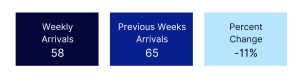
Vessel arrivals fell 11% this week (65 → 58 vessels), led by steep drops in:

  • Container traffic: down 31%
  • Vehicle Carrier traffic: down 29%

Passenger traffic increased by 17% (12 → 14 vessels) as cruise season continues

Berth arrivals dropped 15% (71 → 60), with sharp declines at:

  • March Point: down 42%
  • Port Angeles: 0 arrivals (down from 2)
  • Everett and Aberdeen: each down 2 → 1

Bright spot: Cherry Point climbed +50%


Operational & Tech Updates

AIS Network: Ellis tower is currently receiving repairs.

New Port Directory: We’re working to launching an online Port Directory, set to replace the discontinued Port Handbook. Expect a preview at our Annual Member Meeting in September.


Upcoming Events

Annual Member Meeting
September 11, 2025, Ballard Elks Lodge, 11:00 AM – 1:00 PM
Join us for updates on vessel trends, AIS infrastructure, policy priorities, and a look at what’s ahead in 2026. Lunch is included, parking is free, and we’ll be honoring Rep. Julia Reed with our first-ever Legislator of the Year Award. A private Q&A will follow the program. Learn more and RSVP now.

National Harbor Safety Conference
March 24–25, 2026, Bell Harbor Conference Center, Seattle
The Puget Sound Harbor Safety Committee is proud to host the 2026 National Harbor Safety Conference, with administration by the Marine Exchange. We’ll be welcoming hundreds of industry leaders from across North America for two days of panels, keynotes, networking, and local maritime insight. Learn more & sign up to receive updates.

Sponsorship opportunities available — prospectus coming this week. Contact us if you are interested.


Tariff Watch

The Trump administration announced sweeping new tariffs that could sharply impact Pacific Northwest trade:

  • 35% tariffs on most Canadian goods, effective August 1.
  • 50% tariffs on copper, also starting August 1, under a Section 232 national security claim. Copper is the world’s most important industrial metal.
  • Tariff letters sent to several countries (including Japan, South Korea, Brazil, Philippines), warning of 20–50% duties. Some tariffs were reduced.
  • Tariffs on European Union goods are expected soon; details pending as negotiations continue.

With cargo demand already vulnerable, these moves may strain pricing, volume, and long-range booking decisions for regional shippers and terminals.


Community Highlight: The Eagle In Seattle

This week, we welcomed the USCGC Eagle — known as “America’s Tall Ship” — to Puget Sound. A floating symbol of maritime tradition and Coast Guard training, the Eagle welcomed the public for tours and brough some much needed joy to the maritime community.

I had the opportunity to board her during docking, and it was a powerful reminder of what makes this industry so inspiring. Thank you to Captain and crew for hosting us and opening up your ship to passengers. Wishing everyone aboard the EAGLE a safe voyage home after completing their port calls in Canada.


Upcoming Change to ERTV Fee Structure – Streamlining Vessel Monitoring Costs


FOR IMMEDIATE RELEASE
July 3, 2025
Contact: Patrick Gallagher
patrick@marexps 206-771-1620

Upcoming Change to ERTV Fee Structure –

Streamlining Vessel Monitoring Costs

Seattle, WA – To streamline operations and support a more balanced system, the Marine Exchange of Puget Sound will be consolidating its long-standing vessel monitoring fee into the existing Emergency Response Towing Vessel fee, which is required under Washington State law. This change will ensure every commercial vessel calling Puget Sound benefits from comprehensive monitoring and 24/7 shift-based support—further enhancing safety for all users of our ports. This update represents a joint effort between the Marine Exchange and the ERTV Compliance Group to improve transparency and administrative efficiency for all vessel operators calling Puget Sound.

WHAT’S CHANGING

Effective August 1, 2025, the Marine Exchange will no longer invoice individually for the vessel monitoring fee currently assessed on arriving vessels. Instead, those costs will be included in the mandatory ERTV invoice structure under RCW 88.46.130

WHY THIS MATTERS

For decades, the Marine Exchange has provided 24/7 watchstanding and real-time monitoring to support the safe movement of commercial vessels. Until now, this essential service has been funded voluntarily—supported by about 77% of arrivals.

By integrating these costs into the ERTV framework:

  • Operators will no longer receive a separate invoice for vessel monitoring.
  • Billing will be more streamlined and unified – aligning regulatory compliance with system-wide operational benefits.

WHAT’S STAYING THE SAME

  • The ERTV program, as mandated by Washington State, remains unchanged in scope and operation.
  • The Marine Exchange’s 24/7 AIS monitoring, coordination with the Coast Guard and Pilots, and support of port resilience will continue without interruption.
  • Members will retain full access to Marine Exchange arrival/departure tracking, alerts, and maritime domain tools.

The Marine Exchange of Puget Sound recognizes that any change in cost structure raises important questions, and is committed to working closely with operators to ensure clarity, transparency, and value. Please don’t hesitate to contact the Marine Exchange if you have questions or would like to discuss the operational or financial details of this transition.

Thank you for your continued partnership and support in helping ensure the safety and efficiency of our waterways.

###

Weekly Roundup: Global Ripples, Local Traffic

As the maritime world braces for geopolitical shifts, tariff changes, and supply chain tremors, Puget Sound continues to offer a front-row seat to how global currents shape regional activity. Here’s a concise view of what moved this week—from vessel and berth trends to policy headlines and the future of Coast Guard support.


Vessel & Berth Trends: A Solid Uptick (!)

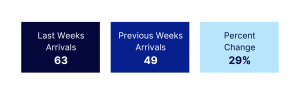
Vessel Arrivals rose by 29% (49 → 63 vessels), driven by sharp increases in:

  • Bulk cargo: up 167%
  • Tug/ATB movements: up 300%
  • Vehicle shipments: up 60%

Berth Arrivals climbed 26% (54 → 68), with standout gains in:

  • Tacoma: up 71%
  • Cherry Point: up 100%
  • March Point: up 40%

These surges point to rising industrial throughput, repositioning ahead of summer fuel runs, and shifting terminal capacity across the Sound.


Operational Snapshot

All seven AIS towers in our network reported 100% uptime with clean, uninterrupted transmissions.


Policy Pulse: From State Law to Global Trade

Washington State Legislative 

Changes (Effective July 27, 2025):

  • SB 5191: Expands paid leave for maritime workers
  • HB 1167: Strengthens maritime education in schools
  • HB 1511: Increases pay for ferry captains and deck officers

Federal Developments:

  • Imports at the Ports of Los Angeles and Long Beach dropped 24% in May—the lowest since mid-2023.
  • Spot shipping rates (Shanghai to West Coast) fell nearly 7% after early summer highs.
  • The USTR backed off proposed penalties on non-U.S. LNG tankers and vehicle carriers, attempting to ease supply chain pressures.

Spotlight: Coast Guard Funding in Limbo

Despite unanimous Senate approval of S. 524, the Coast Guard Authorization Act of 2025, the bill is stalled in the House. Majority Leader Steve Scalise announced it won’t be brought to a vote, delaying key funding and reforms.

Meanwhile, the FY2026 DHS budget proposal slashes shore infrastructure funding from $400 million to just $21 million. This comes despite a well-documented $7 billion backlog in repairs and modernization needs.

These delays have direct implications for Coast Guard readiness—and by extension, for everyone operating in our waters.


Final Take: Why It Matters

Vessel and berth volumes are signals. Changes in traffic reflect more than cargo flows; they echo policy shifts, labor movements, and geopolitical uncertainty.

A resilient maritime system isn’t just built on ships and terminals—it’s built on coordination, infrastructure, and well-supported public service partners like the U.S. Coast Guard.

At the Marine Exchange, we’ll continue tracking the data, maintaining uptime, and telling the story behind the numbers.


Let’s Stay Connected

What are you seeing in your corner of the maritime world? How are these national and global changes showing up at your dock?

Weekly Roundup: Arrivals Lag, Maritime Laws Land, Youth Fundraiser Gains Steam

Executive Summary

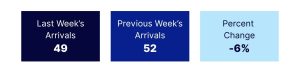
Vessel activity dipped last week across Washington ports — a concerning trend given the ongoing cruise season. Overall arrivals dropped from 52 to 49, continuing a downward trajectory when our seasonal average should be topping 60.

Notable Changes:
  • Tanker arrivals rose +29% (from 7 to 9)
  • General cargo fell to 0 (from 2)
  • Container ships dipped slightly (–6%)
  • Passenger traffic held steady at 13 vessels

Operations & Technology

  • New Data Access Tool: We’ve signed a contract to build an API for real-time watch floor data. Once live, members will be able to integrate live traffic insights into their own operational platforms.
  • AIS Network Status: All 7 receiver towers are fully operational with 100% uptime this week.

Policy & Legislative Update

New maritime laws take effect on July 27, 2025, with implications for ferry staffing, paid leave, and youth maritime training:

  • HB 1167 – Expands maritime education
  • SB 5191 – Enacts paid family leave coverage for dockworkers
  • HB 1511 – Ferry captain salary updates
  • SB 5794 – Big win for Washington Maritime because we successfully pursued WA legislation: Tax rollback goes into effect Jan 1, 2026
  • SB 5281 – A pro-tourism vessel permit, easing nonresident vessel rule (effective Sept 1, 2025)

Spotlight: Global Trade Fog, Local Impact

The Trump-era spike to 145% tariffs on Chinese imports—now eased to a much hyped yet still-punishing 55% total average (without clear or transparent agreements established yet) —has contributed to perpetual market confusion that we’ve yet to fully work out. It’s very hard to say what the long-term trend is for us in PacNW, but overall it’s not looking good for the remaining 2025 and early 2026 ship count.

Ships are still arriving in the US but with less cargo onboard, yet ocean carrier bookings are at near full capacity. What a paradox of the market (!), right? yet it sort of makes sense in that we still need to move cargo that meets economic muster, so there’s got to be an expense ratio that is still profitable.


Scholarship Success – Thank You!

What a day! Our first annual John Veentjer Youth Maritime Scholarship Fundraiser Cruise aboard the Virginia V was a huge success — raising nearly $10,000 to support young people pursuing maritime careers.

It was an incredible day on the water, with sunshine, good company, and powerful stories. Chloe, a graduate of the inaugural Maritime High school class and future mariner, shared her journey and plans to attend Cal Maritime this fall. Many attendees shared memories of the Virginia V — and for many like us, it was their first time taking her out on a cruise.

If you were not able to make it, there’s still time to support the fund. We’ll continue fundraising through the year, with scholarships awarded in May 2026 in partnership with YMTA. Donate here to help us keep the momentum going and support the next generation of maritime professionals.

Weekly Roundup: Vessel Traffic Slows, Legislative Countdown, and a 90-Day Pause on Tariffs

Good afternoon everyone!

Communications Director Sara here, bringing you this week’s Marine Exchange roundup (Patrick is currently in Hawaii—and yes I can assure you, I’m just as jealous as you are).

It’s been a full week in Washington maritime as always, marked by shifting vessel traffic, ongoing work in Olympia, and a sudden (but for now temporary) pause on some of the international tariff pressure.

Let’s dig in.


Executive Summary

  • Vessel arrivals decreased 19% compared to last week.
  • Patrick Gallagher met with The American Waterways Operators and Sam Hendrickson (Senator Jamie Peterson’s office) this week to educate them on the real-world impacts of the stevedore tax (SB5794) on Washington maritime jobs & operations.
  • Tariffs uncertainty continues: On Wednesday, the Trump Administration announced a 90-day pause on most new tariffs—except those targeting China—raising fresh questions about global trade stability.

Vessel Traffic Snapshot

Category LAST WEEK THIS WEEK % Change
BULK 5 6 20%
CONTAINER 16 14 -13%
GENERAL 1 3 200%
OTHER 1 1 0%
RO/RO 2 3 50%
TANKER 12 7 -42%
TUG/ATB 3 2 -33%
VEHICLES 7 2 -71%


Situational Awareness

  • Weather: Mostly cloudy with rain across Western Washington’s marine zones. No significant fog or wind disruptions were reported.
  • Operational Disruptions: A brief power flicker on Tuesday impacted our offices but had no effect on maritime operations or data systems.

Legislative Engagement & Government Affairs

With just 16 days remaining in the regular session, activity in Olympia is accelerating. Budget talks are intensifying as lawmakers face a multi-billion dollar deficit, but it’s been another strong week for the Marine Exchange’s legislative priorities—five of our seven supported bills remain alive and moving.

Key Legislative Deadlines Coming Up
  • April 16 – Opposite House Cutoff
  • April 27 – Scheduled Sine Die Adjournment

Given the unresolved budget deficit, a Special Session is likely after April 27 to finalize a balanced budget.


Technology & Data

  • AIS Network Status: All 7 towers fully operational, >99.9% uptime. The radio in Ellis is temporarily down, but the team is currently working to restore it.
  • System Updates: Ongoing database optimization; no current anomalies or cybersecurity issues

Looking Ahead

  • The Harbor Safety Committee meeting link for May 7th is out and can be found here.
  • We are partnering with the Sea Scouts to get a blog post out about current updates, ongoing work, and funding help.
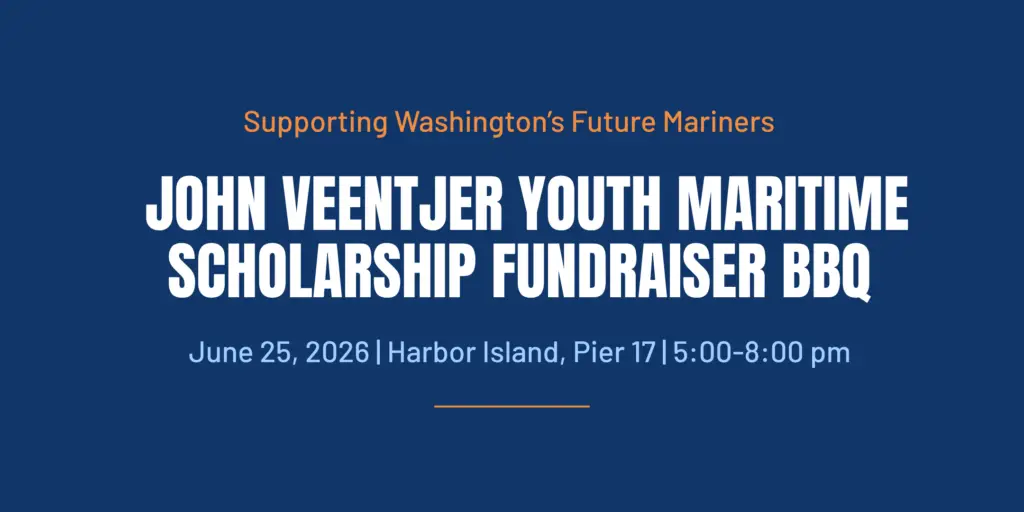
  • Preparations for the first annual John Ventjeer Youth Maritime Scholarship event are in the works. More information to come, but mark your calendars for June 12th, 4:30-7:30 PM.

Spotlight of the Week: Podcast with Representative Julia Reed

At the end of May Patrick and I had the pleasure of sitting down with Julia Reed, State Representative for the 36th legislative district, to discuss maritime updates for this session, what she is working on, and how maritime community members can stay in touch. Listen now wherever you get your podcasts!

We know there’s a lot of uncertainty right now—on the docks, in Olympia, and across the globe. Like many of you, we’re feeling the weight of it all. But please know this: we’re here. Whether you have questions, ideas, or just want to talk through something, the Marine Exchange is your partner.
We will continue to keep moving forward together.
Have a great weekend, everyone.

Sara Zeman
Communications Director, Marine Exchange of Puget Sound
sara@marexps.com